
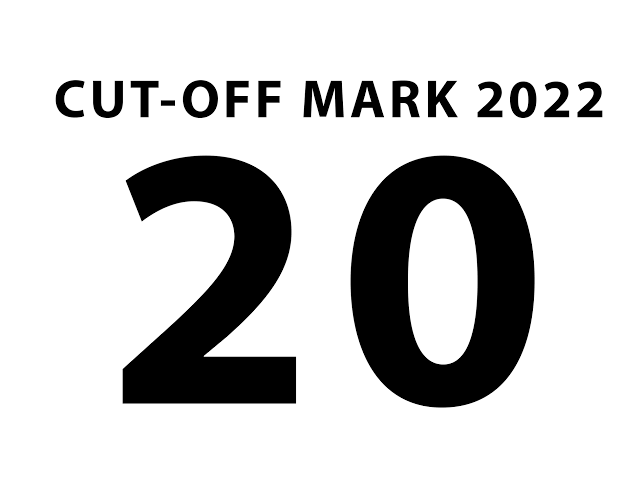
The term cut off point 2022 became one of the most searched educational topics among students and job aspirants. Whether it was a university admission process, competitive examination, recruitment test, or entrance exam, cutoff points played a major role in determining eligibility.
Understanding how cutoff scores work can help candidates estimate their chances of selection and make better academic or career decisions. Many institutions released different cutoff marks based on categories, seat availability, exam difficulty, and candidate performance.
In this guide, you will learn what the cut off point 2022 means, how it is calculated, the factors affecting it, category-wise differences, and practical tips for future examinations.
What Is Cut Off Point 2022?
A cutoff point refers to the minimum score, rank, percentile, or marks required for a candidate to qualify for the next stage of a selection process.
Educational institutions and recruitment authorities use cutoff points to filter candidates when the number of applicants exceeds available seats or vacancies.
The cut off point 2022 was released for various:
- Entrance examinations
- Government recruitment tests
- University admissions
- Professional certification programs
- Competitive examinations
A candidate scoring above the cutoff generally becomes eligible for the next selection stage, while those below it may not qualify.
Why Cutoff Points Matter
Cutoff scores help institutions:
- Maintain selection standards
- Manage limited seats
- Ensure fair competition
- Select the most deserving candidates
For candidates, cutoff marks provide a benchmark for preparation and performance evaluation.
Factors Affecting Cut Off Point 2022
Several factors influenced the cut off point 2022 across different examinations and admission processes.
Number of Applicants
A higher number of applicants generally increases competition. As competition rises, cutoff scores often increase as well.
Difficulty Level of the Examination
When an examination is difficult, cutoff marks may decrease because fewer candidates achieve high scores.
On the other hand, easier exams often result in higher cutoff points.
Available Seats or Vacancies
Limited seats usually lead to higher cutoff scores. More seats may result in relatively lower cutoffs.
Candidate Performance
The overall performance of candidates significantly affects final cutoff marks.
If many students score exceptionally well, authorities may raise the cutoff threshold.
Reservation Policies
Category-wise reservations create different cutoff marks for different groups of candidates.
Category-Wise Cutoff Marks Explained
One important aspect of the cut off point 2022 is category-wise variation.
Different categories often receive separate cutoff criteria.
Common categories include:
- General
- OBC
- EWS
- SC
- ST
- PwD
Why Categories Have Different Cutoffs
Reservation policies aim to provide equal educational and employment opportunities.
As a result, cutoff scores may vary between categories based on:
- Seat allocation
- Candidate pool size
- Reservation guidelines
- Institutional policies
Candidates should always check category-specific cutoff announcements instead of relying on general cutoff information.
Cut Off Point 2022 in Competitive Examinations
Competitive examinations use cutoff points extensively.
Examples include:
- Banking examinations
- Civil service examinations
- Engineering entrance tests
- Medical entrance exams
- Defense recruitment exams
In most cases, authorities release:
Qualifying Cutoff
This is the minimum score required to pass the examination.
Selection Cutoff
This refers to the score needed for final selection.
The selection cutoff is often higher than the qualifying cutoff because it depends on competition levels.
Many national examinations published category-wise cutoff scores after result declarations.
Admission Cutoff Scores for Colleges and Universities
University admissions frequently rely on cutoff scores or ranks.
The cut off point 2022 for educational institutions varied according to:
- Course popularity
- Institution reputation
- Seat capacity
- Candidate demand
Highly competitive courses often required higher scores.
Popular programs generally included:
- Engineering
- Medicine
- Business Administration
- Computer Science
- Law
Students often monitored opening and closing ranks to estimate admission possibilities.
Opening Rank vs Closing Rank
Opening Rank:
The first admitted candidate’s rank.
Closing Rank:
The last admitted candidate’s rank.
These figures help students understand admission competitiveness.
How Authorities Calculate Cutoff Scores
The process of determining the cut off point 2022 generally follows a structured methodology.
Step 1: Evaluate Candidate Scores
Authorities analyze the performance of all participants.
Step 2: Review Seat Availability
The number of available seats is considered.
Step 3: Analyze Competition Level
Examining applicant volume helps determine competitiveness.
Step 4: Apply Reservation Rules
Category-specific reservations are incorporated.
Step 5: Finalize Cutoff Thresholds
After reviewing all variables, final cutoff scores are announced.
This approach ensures transparency and fairness in the selection process.
How to Predict Future Cutoff Trends
Although exact predictions are impossible, candidates can estimate likely cutoffs using historical data.
Review Previous Year Data
Previous cutoff trends often reveal useful patterns.
Analyze Exam Difficulty
Understanding exam complexity helps estimate possible score ranges.
Monitor Applicant Numbers
More applicants typically increase competition.
Follow Official Announcements
Official notifications provide the most reliable updates.
By studying these factors, students can develop realistic expectations.
Common Mistakes Students Make Regarding Cutoff Scores
Many candidates misunderstand how cutoff systems work.
Assuming Last Year’s Cutoff Will Repeat
Cutoff marks change every year.
Therefore, relying solely on historical scores can be misleading.
Ignoring Category-Specific Information
Always check the cutoff applicable to your category.
Focusing Only on Minimum Scores
Candidates should aim well above expected cutoffs for better selection chances.
Following Unofficial Sources
Only trust verified announcements from official institutions.
Avoid rumors and unconfirmed predictions.
Tips to Score Above Future Cutoff Levels
Achieving scores above expected cutoffs requires strategic preparation.
Create a Study Plan
Develop a realistic timetable and follow it consistently.
Practice Previous Papers
Past papers improve familiarity with exam patterns.
Take Mock Tests
Regular mock exams help identify weak areas.
Improve Time Management
Efficient time allocation increases overall performance.
Focus on High-Weightage Topics
Prioritize topics that contribute more marks.
Track Progress
Regular self-assessment ensures continuous improvement.
Students who consistently evaluate their preparation often achieve stronger results.
Why Understanding Cut Off Point 2022 Still Matters
Even though newer examinations have been conducted, analyzing the cut off point 2022 remains valuable.
It helps candidates:
- Understand competition levels
- Compare performance trends
- Predict future cutoff movements
- Plan preparation strategies
- Make informed admission decisions
Educational institutions and recruiters continue to use similar methodologies when determining cutoff scores.
Therefore, studying previous cutoff patterns remains an effective planning tool.
Frequently Asked Questions (FAQs)
1. What does cut off point 2022 mean?
The cut off point 2022 refers to the minimum marks, score, rank, or percentile required for qualification or selection in a specific examination or admission process.
2. How is a cutoff point calculated?
Authorities consider exam difficulty, candidate performance, seat availability, reservation policies, and competition levels before determining cutoff scores.
3. Can cutoff marks change every year?
Yes. Cutoff marks vary annually based on multiple factors, including candidate participation and examination difficulty.
4. Are category-wise cutoff scores different?
Yes. Most institutions release separate cutoff marks for General, OBC, SC, ST, EWS, and other reserved categories.
5. Why should students check previous cutoff data?
Previous cutoff trends help estimate future competition levels and assist in preparation planning.
Conclusion
The cut off point 2022 served as an important benchmark for admissions, recruitment examinations, and competitive tests. Understanding how cutoff scores are determined allows candidates to make informed decisions and prepare more effectively.
Several factors influence cutoff marks, including examination difficulty, applicant numbers, seat availability, and reservation policies. By analyzing previous cutoff trends and focusing on strategic preparation, students can improve their chances of securing admission or employment opportunities.
Rather than aiming only for the minimum requirement, candidates should target scores well above expected cutoff levels. Doing so increases confidence and strengthens selection prospects.
Start implementing these preparation strategies today to improve your future examination performance and achieve your academic or career goals.