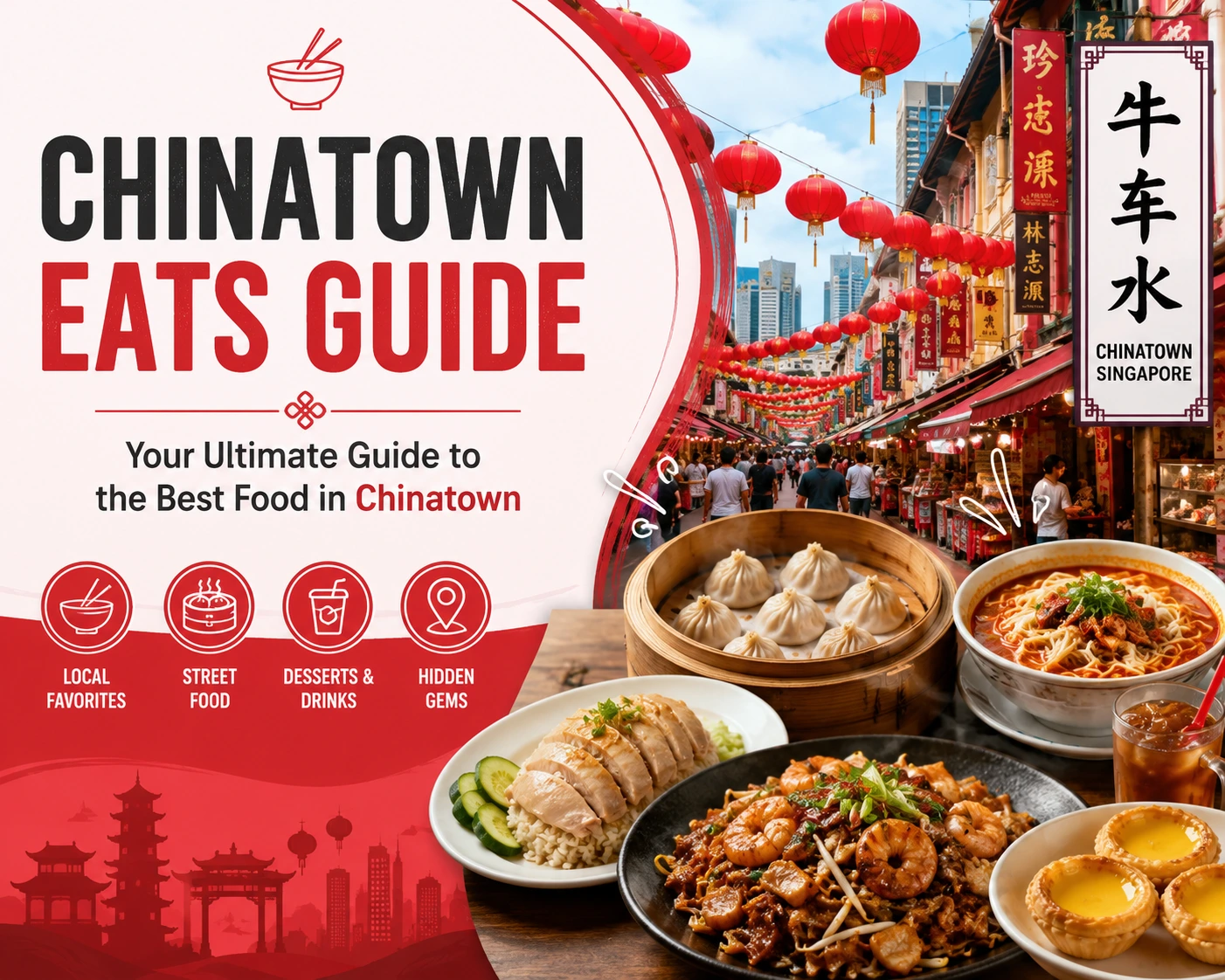
Singapore is famous for its incredible food culture, but few places capture that spirit better than Chinatown. Walk through its colorful streets and you’ll find sizzling woks, fragrant spices, freshly steamed dumplings, smoky barbecue, and desserts that have been loved for generations. Every corner seems to hide another delicious surprise. That’s exactly why this Chinatown Eats Guide exists—to help you discover the dishes and dining spots that locals return to again and again.
Whether you’re visiting Singapore for the first time or you’ve lived here for years, Chinatown never feels boring. New cafés open beside decades-old family businesses, while famous hawker stalls continue serving recipes that haven’t changed in years. Some places attract long queues. Others remain hidden gems known only by regular customers. This Chinatown Eats Guide will help you experience both.
1. Start Your Food Adventure at Chinatown Complex Food Centre
No food trip should begin anywhere else. Chinatown Complex Food Centre is the largest hawker centre in Singapore and home to hundreds of food stalls. The variety is honestly overwhelming—in the best possible way.
You’ll find everything from roasted meats and handmade noodles to seafood, satay, claypot rice, and traditional desserts. Some stalls have earned international recognition, while others quietly serve incredible meals without the spotlight.
Come hungry. Really hungry.
Many visitors make the mistake of eating one meal before leaving. Instead, share dishes with friends so you can sample several specialties in one visit. That’s one of the smartest tips in any Chinatown Eats Guide, because the biggest challenge isn’t finding good food—it’s deciding what to skip.
2. Taste Singapore’s Famous Hawker Classics
If you’re exploring Chinatown Eats Guide, don’t settle for familiar international dishes. This is the perfect place to enjoy authentic Singaporean favorites prepared by experienced hawkers.
Some classics worth ordering include:
- Hainanese chicken rice
- Char kway teow
- Hokkien mee
- Laksa
- Roast duck
- Wanton noodles
Every stall has its own cooking style, secret recipe, and loyal following. That’s what makes exploring so much fun. Even two plates of chicken rice can taste completely different depending on where you order.
A good Chinatown Eats Guide isn’t about telling you there’s only one “best” stall. Food is personal, and discovering your own favorite is part of the adventure.
3. Explore Traditional Chinese Restaurants
Beyond the busy hawker centres, Chinatown offers countless traditional Chinese restaurants serving recipes from different regions of China.
You can enjoy:
- Cantonese seafood
- Sichuan dishes with bold flavors
- Northern Chinese dumplings
- Beijing-style roasted duck
- Handmade noodles
Many restaurants have been operating for decades, preserving family recipes passed from one generation to another. Walking into these places feels different from dining in modern restaurants. The atmosphere is warm, familiar, and full of history.
Some restaurants still prepare dishes using traditional cooking techniques that require hours of careful preparation. And honestly…you can taste the difference.
4. Discover Hidden Cafés Between Heritage Shophouses
Chinatown isn’t only about traditional food anymore. Over the past few years, the neighborhood has welcomed stylish cafés inside beautifully restored heritage buildings.
You’ll discover specialty coffee, fresh pastries, artisan sandwiches, creative brunch menus, and homemade desserts served in charming interiors that mix history with modern design.
Some cafés are easy to spot, while others hide along quiet side streets. Finding them almost feels like uncovering a secret.
This mix of old and new is one reason the Chinatown Eats Guide remains popular among both locals and tourists. You can enjoy kaya toast for breakfast, handmade dumplings for lunch, and finish the day with handcrafted coffee and cake—all within walking distance.
As you continue exploring, you’ll notice that Chinatown isn’t just a place to eat. It’s a neighborhood where every meal tells a story, every stall has its own loyal customers, and every visit introduces something you’ve never tried before. The next part of this Chinatown Eats Guide dives deeper into must-try desserts, street snacks, local favorites, and practical dining tips that make your food adventure even more memorable.
5. Don’t Miss Chinatown’s Famous Street Snacks
One of the best parts of exploring the neighborhood is stopping whenever something smells too good to ignore. Freshly grilled satay, crispy spring rolls, steamed buns, fried carrot cake, and savory pancakes are just a few snacks you’ll come across while wandering the streets.
Some vendors have been serving the same recipes for decades, while others have added creative twists to traditional favorites. That’s part of Chinatown’s charm—it respects tradition without being afraid of trying something new.
Every great Chinatown Eats Guide encourages visitors to slow down instead of rushing from one attraction to another. Sometimes the most memorable bite comes from a small stall you almost walked past.
6. Save Room for Traditional Desserts
After enjoying a satisfying meal, it’s time for dessert. Thankfully, Chinatown offers plenty of sweet treats that perfectly balance the rich flavors of local cuisine.
Popular desserts include:
- Mango sago
- Ice kachang
- Chendol
- Sesame paste
- Peanut soup
- Tau suan
- Egg tarts
- Traditional Chinese pastries
Some desserts are served warm, making them perfect on rainy days, while others are cold and refreshing—ideal for Singapore’s tropical weather.
And if you enjoy trying local specialties, don’t leave without tasting at least one traditional dessert. They may look simple, but many have been enjoyed by generations of Singaporeans.
This Chinatown Eats Guide wouldn’t be complete without reminding you that dessert is never just an afterthought here. It’s an essential part of the dining experience.
7. Experience the Bustling Night Food Scene
Chinatown transforms after sunset. The streets become livelier, restaurants fill with families and friends, and the aroma of freshly cooked food drifts through the evening air.
Many people actually prefer visiting at night because the atmosphere feels more vibrant. Outdoor seating areas buzz with conversation, food stalls stay busy, and nearby heritage buildings glow under warm lighting.
Whether you’re craving grilled seafood, sizzling noodles, barbecue skewers, or comforting bowls of soup, the evening offers plenty of choices.
One helpful tip in this Chinatown Eats Guide is to arrive slightly earlier than the main dinner rush. You’ll have an easier time finding seats and shorter waiting times at the most popular stalls.
8. Visit Local Bakeries and Tea Shops
Food in Chinatown isn’t limited to full meals. Local bakeries and traditional tea shops deserve a place on your itinerary too.
Freshly baked mooncakes, wife biscuits, pineapple tarts, almond cookies, and fluffy sponge cakes line bakery shelves throughout the neighborhood. Many recipes have remained unchanged for years, offering visitors an authentic taste of traditional Chinese baking.
Tea lovers will also appreciate the specialty tea shops selling high-quality oolong, jasmine, pu-erh, and green teas. Some stores even allow customers to sample different varieties before making a purchase.
Bringing home tea or pastries makes a thoughtful souvenir that’s far more memorable than ordinary tourist gifts.
This section of the Chinatown Eats Guide highlights an important fact: eating isn’t only about restaurants. Sometimes a warm pastry and a freshly brewed cup of tea create the most relaxing break during a busy day of sightseeing.
As your culinary journey continues, you’ll realize that Chinatown offers much more than famous hawker stalls. Hidden eateries, family-run businesses, traditional bakeries, and lively evening markets all contribute to an unforgettable dining experience. In the next part of this Chinatown Eats Guide, we’ll explore local favorites, budget-friendly dining tips, seasonal food experiences, and the best ways to enjoy Chinatown like a true local.
9. Enjoy Budget-Friendly Meals Without Compromising on Quality
One of the biggest reasons people love dining in Chinatown is the excellent value for money. You don’t have to spend a fortune to enjoy a satisfying meal. In fact, some of the most memorable dishes come from humble hawker stalls where recipes have been perfected over decades.
A bowl of noodles, a plate of chicken rice, or freshly made dumplings can be both affordable and incredibly flavorful. That’s why locals often choose Chinatown when they want great food without stretching their budget.
Every Chinatown Eats Guide should remind visitors that expensive doesn’t always mean better. In Chinatown, quality is often measured by the queue outside a stall rather than the price on the menu.
10. Look for Hidden Food Gems Off the Main Streets
While the busiest roads are packed with famous eateries, don’t overlook the quieter lanes nearby. Some of Chinatown’s best-kept secrets are tucked inside small shophouses or along side streets that many tourists simply walk past.
You might discover a tiny noodle shop run by the same family for generations or a cozy restaurant serving regional Chinese specialties that rarely appear in travel guides.
Exploring without a strict plan is part of the fun. Wander a little, follow the tempting aromas, and don’t be afraid to try somewhere that isn’t trending on social media.
This Chinatown Eats Guide encourages curiosity because some of the most rewarding meals are found where you least expect them.
11. Visit During Festivals for an Even Richer Food Experience
If your travel dates are flexible, consider visiting Chinatown during one of its major celebrations. Chinese New Year is especially magical, with beautifully decorated streets, festive markets, and seasonal snacks available almost everywhere.
The Mid-Autumn Festival is another wonderful time to explore. Bakeries display beautifully crafted mooncakes, lanterns brighten the streets, and many shops introduce limited-edition treats that aren’t available throughout the year.
Festival periods also bring a lively atmosphere that makes dining even more enjoyable. Families gather, friends celebrate together, and the neighborhood feels full of energy from morning until late at night.
Many travelers discover that experiencing these seasonal events adds another layer to the Chinatown Eats Guide, turning a simple meal into a memorable cultural experience.
12. Eat Like a Local with These Simple Tips
You don’t need to be a food expert to enjoy Chinatown like a local. A few practical tips can make your visit smoother and more enjoyable.
Arrive before peak lunch or dinner hours if you want shorter queues. Carry some cash, as smaller stalls may not always accept every payment method. If you’re visiting with friends or family, order different dishes and share them so everyone gets to sample more flavors.
Don’t hesitate to ask stall owners for recommendations either. Many are happy to suggest their signature dishes, especially if it’s your first visit.
And remember, patience often pays off. A long queue usually means the food is worth waiting for.
The final advice in this Chinatown Eats Guide is simple: come with an open mind and an empty stomach. You’ll enjoy the experience far more when you’re willing to try something new instead of sticking only to familiar dishes.
By now, you’ve probably realized that Chinatown is much more than a place to grab lunch. It’s a destination where history, culture, and incredible food come together in one vibrant neighborhood. From legendary hawker stalls and traditional restaurants to charming cafés and hidden culinary treasures, every visit offers something different. In the final part of this Chinatown Eats Guide, we’ll wrap everything up with a helpful conclusion and answer some of the most frequently asked questions to help you plan your food adventure with confidence.
Conclusion
Whether you’re a first-time visitor or a returning foodie, Chinatown never disappoints. Its streets are packed with authentic flavors, welcoming eateries, and culinary traditions that have stood the test of time. From bustling hawker centres and family-run restaurants to trendy cafés and hidden dessert shops, every meal feels like a new discovery.
This Chinatown Eats Guide proves that great food isn’t only about famous restaurants or expensive menus. Sometimes the most unforgettable dishes come from a small stall with a handwritten sign and a recipe that’s been passed down for generations. Take your time, explore beyond the main streets, and don’t be afraid to try something unfamiliar—you may just find your new favorite meal.
If you’re planning your next Singapore food adventure, keep this Chinatown Eats Guide handy. It will help you discover local favorites, uncover hidden gems, and enjoy one of the city’s most exciting dining neighborhoods with confidence.
Frequently Asked Questions (FAQs)
1. What is the best time to visit Chinatown for food?
The best time is during lunch and dinner when most hawker stalls and restaurants are fully operating. If you prefer smaller crowds, arrive slightly before peak meal hours. Following this Chinatown Eats Guide can also help you plan your visit for a smoother dining experience.
2. Is Chinatown suitable for budget travelers?
Yes. Chinatown is one of Singapore’s best places for affordable and delicious meals. You’ll find everything from inexpensive hawker dishes to premium dining options, making it suitable for every budget.
3. What foods should I try first in Chinatown?
Some must-try dishes include Hainanese chicken rice, char kway teow, laksa, roast duck, satay, dumplings, wanton noodles, and traditional desserts like chendol and mango sago.
4. Are there vegetarian food options in Chinatown?
Absolutely. Many restaurants and hawker stalls serve vegetarian noodles, rice dishes, tofu specialties, vegetable dumplings, and meat-free local favorites, giving visitors plenty of choices.
5. Can I explore Chinatown in one day?
Yes, you can experience many of its highlights in a single day. However, food lovers often return several times because there are so many eateries and hidden gems to discover. This Chinatown Eats Guide is a useful companion whether you’re visiting for a few hours or planning multiple trips.