

If you’ve ever stepped into a sleek office tower in Marina Bay, handed over a business card with both hands, and wondered whether you just did it right — welcome to the singapore corporate environment. It’s a world that runs on precision, relationships, and an unspoken set of rules that nobody really hands you a manual for.
Whether you’re a fresh graduate landing your first corporate role, an expat relocating for a regional position, or a business owner trying to understand how things really work here — this guide is for you. The singapore corporate environment is genuinely unlike any other in Southeast Asia. It blends Asian values with Western corporate systems, creates space for innovation while respecting hierarchy, and demands professionalism while quietly rewarding relationship-building behind closed doors.
And if you get it wrong? Well… it can cost you deals, promotions, or even your seat at the table. But get it right, and Singapore becomes one of the most rewarding places on earth to build a career or grow a business.
Let’s break it all down — the culture, the etiquette, the politics, the opportunities, and yes, the mistakes you’ll want to avoid.
What Is the Singapore Corporate Environment?
The singapore corporate environment refers to the collective set of professional norms, cultural values, business practices, workplace structures, and regulatory frameworks that define how companies operate and how people work within them in Singapore. It’s not just about office buildings and corporate hierarchies — it’s a living, breathing system shaped by decades of economic policy, multicultural society, and Singapore’s unique position as a global financial and trade hub.
To understand it properly, you need to appreciate the context. Singapore is a city-state with a population of roughly 5.9 million people, yet it consistently ranks among the top five easiest places in the world to do business. The World Bank, the IMF, and major financial institutions repeatedly recognize Singapore as a model of economic governance. That reputation didn’t come from nowhere — it was built on a deliberate, structured approach to creating a business environment that’s transparent, efficient, and predictable.
In the singapore corporate environment, you’ll find a fascinating intersection of Chinese, Malay, Indian, and Western influences all playing out in daily professional life. This means the way people communicate, negotiate, show respect, and build trust is often layered and nuanced. A nod might mean “I hear you” rather than “I agree.” Silence in a meeting might be thoughtful consideration, not confusion. The concept of “face” — maintaining dignity and avoiding public embarrassment — plays a real, quiet role in how feedback is given and received.
The corporate structure here tends to be quite organized and formal, especially in established companies, government-linked corporations (GLCs), and multinational corporations (MNCs). But increasingly — especially post-pandemic — there’s a growing layer of startup culture and agile work environments that are reshaping what the singapore corporate environment looks like for younger professionals.
And it’s evolving fast. Digital transformation, remote work policies, ESG commitments, and a push for greater diversity and inclusion are all actively reshaping the corporate landscape. In 2026, the singapore corporate environment is at a genuinely exciting crossroads — and knowing how to navigate it gives you a serious edge.
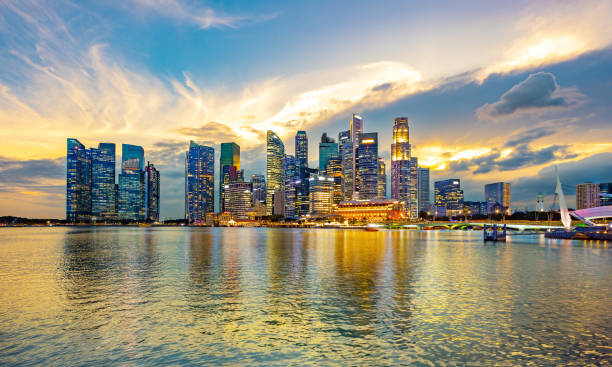
Why the Singapore Business Environment Matters in 2026
You might be wondering — why write a 2026 guide specifically? Because the singapore corporate environment in 2026 is meaningfully different from what it was even three years ago. Several major shifts have converged to create a new kind of professional landscape, and understanding these shifts is essential whether you’re job-hunting, expanding your business, or trying to lead a team effectively here.
First, the talent war is real. Singapore’s highly educated workforce is increasingly mobile and selective. Companies — both local and MNCs — are competing aggressively for skilled professionals, and that’s changed the power dynamic in the singapore business environment. Employers are having to think harder about company culture, benefits, flexibility, and purpose. It’s no longer enough to offer a good salary in a prestigious building. People want meaning, growth, and a healthy work culture.
Second, Singapore has doubled down on its innovation agenda. The government’s Smart Nation initiative, combined with significant investment in fintech, biotech, green energy, and AI, means the singapore corporate environment is increasingly technology-forward. Companies that haven’t started their digital transformation are already behind. And for employees, digital literacy is no longer a bonus — it’s an expectation.
Third, the regional role of Singapore has only grown stronger. As tensions and uncertainties affect other global business hubs, more companies are choosing Singapore as their Asia-Pacific headquarters. This means a constant influx of international professionals, cross-cultural teams, and global business mandates being managed from Singaporean offices. Navigating this in the singapore professional environment requires both cultural intelligence and strategic thinking.
And fourth — perhaps most importantly — there’s a genuine shift in corporate values. ESG (Environmental, Social, and Governance) considerations are no longer just for annual reports. They’re influencing hiring decisions, supplier choices, and investment flows. Singapore’s corporate governance standards are tightening, and businesses are being held to higher accountability. Understanding this values shift is critical to thriving in today’s singapore corporate environment.
In short: 2026 is a pivotal year, and the professionals and businesses that understand this environment deeply will have a serious competitive advantage.
Corporate Culture in Singapore: Values, Norms, and Unwritten Rules
This is probably the section you came here for — because understanding the corporate culture in Singapore is what separates the people who just survive here from the ones who genuinely thrive.
Let’s start with something that surprises a lot of newcomers: the singapore corporate environment operates on a kind of dual code. On the surface, everything looks very Western — English is the language of business, the office layouts resemble any modern workspace in London or New York, and processes are formalized with documentation, KPIs, and compliance frameworks. But underneath all of that runs a deeply Asian current of values: respect for seniority, group harmony over individual expression, and the quiet but powerful role of relationships (or “guanxi” as the Chinese term goes).
Respect for hierarchy is perhaps the most important cultural norm to understand. In most singaporean companies — especially those with local Chinese-majority leadership or in traditional industries — seniority matters enormously. You address senior colleagues with appropriate titles, you don’t interrupt them in meetings, and you certainly don’t publicly challenge their ideas in front of others. This doesn’t mean ideas can’t be questioned — it just means the how matters as much as the what. A well-crafted private conversation will get you much further than a public disagreement.
Consensus-building is another key feature of the singapore workplace culture. Decision-making can sometimes feel slow to Westerners who are used to faster, more individualistic approaches. But in Singapore, the process of building alignment — especially in larger corporations and GLCs — is deliberate and valued. Once decisions are made, though, execution tends to be swift and organized.
Kiasu culture — a Singlish term meaning “fear of losing” — shows up in professional settings as intense competitiveness, a strong work ethic, and a desire to always be prepared. It’s not unusual for singaporean professionals to put in long hours, over-prepare for presentations, and monitor their performance metrics closely. This can be both a strength (drive, precision, thoroughness) and a challenge (burnout, risk aversion, reluctance to try unconventional approaches).
Relationship-building outside the office also plays a bigger role than you might expect in the singapore corporate environment. After-work dinners, team gatherings, and informal networking events are where real trust gets built. If you’re always rushing out the door at 6pm sharp while your team heads to dinner, you might be technically doing your job well — but you’re missing the social fabric that underpins a lot of professional relationships here.
Work-life balance, it should be said, is a topic of ongoing conversation in Singapore. The culture has historically leaned toward long working hours and high output, but there’s a growing, vocal movement — especially among millennials and Gen Z professionals — pushing back against that norm. Many companies are responding with hybrid work policies, mental health initiatives, and more flexible arrangements. The singapore corporate environment is slowly but genuinely changing on this front.
Types of Corporate Workplaces in Singapore
Not all workplaces in Singapore are the same — and the type of company you’re working in will dramatically shape your experience of the singapore corporate environment. It helps to understand the different categories clearly.
Multinational Corporations (MNCs) are perhaps the dominant feature of Singapore’s corporate landscape. Companies like Google, JP Morgan, Unilever, Shell, and thousands of others operate regional or global headquarters from Singapore. MNC culture tends to be more internationally aligned — more open to diversity, more structured around global HR policies, and generally more flexible than local firms. English is the lingua franca, the hierarchy is still present but flatter than traditional local companies, and career development pathways are often better defined. For expats and internationally minded professionals, MNCs are usually the easiest entry point into the singapore corporate environment.
Government-Linked Corporations (GLCs) are a uniquely Singaporean feature. Companies like Temasek Holdings, Singapore Airlines, DBS Bank, and Singtel are either owned or significantly influenced by the Singapore government through entities like Temasek and GIC. GLCs tend to have very structured hierarchies, strong job security, generous benefits, and a culture of formality and protocol. Career progression can be slower and more merit-plus-seniority based. But they also offer stability, prestige, and access to large-scale projects that few private firms can match. Working in a GLC is a different experience from an MNC — more structured, more Singaporean in character, and often more conservative in approach.
Local SMEs (Small and Medium Enterprises) form the backbone of Singapore’s economy and employ a huge proportion of the workforce. The singapore corporate environment in an SME is often more informal, more direct, and more dependent on personal relationships with founders and senior management. Career paths can be less defined but advancement can happen faster. These environments are often more culturally Singaporean and may require navigating Singlish, local customs more fluently, and a more hands-on approach to work.
Startups and Scale-ups represent the newest and fastest-growing category. Singapore has become a genuine startup hub in Southeast Asia, with a thriving ecosystem supported by government grants (like those from Enterprise Singapore), a robust venture capital community, and proximity to the growth markets of Southeast Asia. Startup culture within the singapore corporate environment is more flat, fast-paced, experimental, and results-driven. The dress code is casual, the communication is direct, and failure is talked about more openly. This segment is increasingly attractive to younger singaporean professionals who are drawn to impact and ownership over traditional corporate ladders.
How the Singapore Corporate Hierarchy Actually Works
Understanding corporate hierarchy in Singapore is genuinely important — and not always intuitive, especially if you’re coming from a flat-structure Western workplace.
In most established companies in the singapore corporate environment, the organizational structure is hierarchical and clearly defined. Job titles carry real weight. The Managing Director or CEO sits at the top, followed by Vice Presidents and Directors, then Managers, Executives, and Associates. Each level has different levels of access — to information, to decision-making power, and to leadership visibility. Moving up that ladder is something professionals here take seriously.
What makes singapore’s corporate hierarchy interesting is how it blends formal structure with informal power networks. Your official title matters, yes — but your relationship with senior stakeholders, your visibility in key projects, and your informal reputation within the organization also determine your actual influence. Someone who is technically two levels below you might have the ear of the CEO simply because of trust built over years. This dynamic plays out constantly in the singapore business environment, and learning to read it is a critical skill.
The concept of “face” (from Chinese cultural values, which heavily influence Singapore’s majority ethnic group) also shapes how hierarchy functions. Senior leaders are not publicly questioned or contradicted — not because employees are afraid, but because maintaining respect for seniority is a genuine value here. Criticism, disagreement, and course-correction all happen — but typically through private channels, indirect communication, or carefully framed suggestions rather than open confrontation.
One thing that surprises many new professionals in Singapore is the expectation of proactive deference to seniors. Waiting for seniors to sit first, pouring tea or drinks for more senior colleagues at meals, not interrupting senior speakers in meetings — these are not seen as subservience but as professionalism and respect. If you come from a culture where these behaviors seem overly formal, it’s worth adjusting your lens. In the singapore corporate environment, they signal maturity and cultural intelligence.
That said, the hierarchy is not impenetrable. Singapore’s corporate meritocracy is real — hard work, results, and demonstrated competence are genuinely rewarded. The system values output and performance. You can rise quickly if you deliver well, maintain good relationships, and navigate the cultural norms thoughtfully.
Singapore Business Etiquette: Meetings, Cards, and Communication
This is where theory meets practice. The singapore corporate environment has a set of business etiquette norms that are specific, observable, and important to get right — especially in client-facing or high-stakes professional situations.
Business card exchange is perhaps the most iconic etiquette ritual in Singapore’s corporate world. When you receive someone’s card, you take it with both hands, pause to read it, and treat it respectfully. You don’t shove it immediately into your pocket or scribble notes on it. This ritual is rooted in Chinese business culture and signals that you respect the person and their position. When giving your card, present it with both hands as well, with the text facing the recipient. If you’re in a group setting, exchange cards in order of seniority — starting with the most senior person in the room.
Meeting etiquette in the singapore corporate environment follows several clear norms. Punctuality is non-negotiable — arriving on time (or slightly early) signals respect. Meetings in established corporations tend to have clear agendas, and going wildly off-topic is frowned upon. Participation is expected but calibrated — you’re not expected to dominate conversation, especially if there are more senior people present. If you’re the most junior person in the room, listen more than you speak, and when you do speak, be concise and prepared.
Communication style in Singapore is often described as “high-context” — meaning that a lot of meaning is conveyed indirectly, through tone, framing, and what is NOT said. A singaporean colleague might tell you “we might want to consider some changes to the proposal” when they actually mean “this needs to be significantly reworked.” Learning to read between the lines, and to communicate your own messages diplomatically, is a core skill in the singapore professional environment.
Email and written communication tends to be formal, especially in the initial stages of a relationship. Opening with “Dear Mr./Ms. [Last Name]” rather than “Hey [First Name]” is standard practice in many industries. Even as relationships warm up, a degree of professionalism in written communication is maintained — especially in inter-departmental or inter-company correspondence. As a general rule in the singapore corporate environment, err on the side of formality until the other person signals otherwise.
Language in the singapore corporate environment is primarily English — but it’s Singaporean English, which comes with its own flavors. Singlish (Singaporean Colloquial English) pops up in casual office conversations — expect to hear “lah,” “can,” “already” used in ways that might seem unusual if you’re not familiar with local speech patterns. In formal settings, standard professional English is the norm. Understanding Singlish — even if you don’t speak it — goes a long way toward building genuine rapport with local colleagues.

Costs of Doing Business in Singapore
If you’re setting up operations or thinking about expanding into the singapore corporate environment, understanding the cost landscape is essential. Singapore is undeniably expensive — but it’s also structured and transparent in a way that makes cost planning relatively predictable.
Office space in Singapore’s Central Business District (CBD) — think Raffles Place, Marina Bay, or Tanjong Pagar — commands some of the highest commercial rents in Asia. Grade A office space in Marina Bay can range from SGD 12 to SGD 18 per square foot per month, depending on the building and current market conditions. However, areas like Jurong East, one-north, or Alexandra are significantly more affordable and increasingly popular with tech and innovation companies.
Corporate tax in Singapore is set at a flat rate of 17% — one of the lowest among developed economies. But for SMEs and startups, effective tax rates can be much lower due to the Startup Tax Exemption scheme and Partial Tax Exemption. This is one of the biggest draws of Singapore as a business incorporation destination and makes the singapore corporate environment highly attractive to international entrepreneurs.
Employment costs include CPF (Central Provident Fund) contributions — a compulsory social security savings scheme. Employers currently contribute 17% of the employee’s monthly wage to CPF (for employees below 55 and earning above SGD 750). This is a significant payroll cost but also a valued employee benefit in the singapore workplace.
Professional services — legal, accounting, HR, and compliance — are readily available in Singapore but can be expensive. A mid-tier law firm will bill at SGD 400 to SGD 800 per hour for corporate work. Accounting and compliance services for a mid-sized company typically run SGD 2,000 to SGD 10,000 annually depending on scope.
Despite these costs, the value proposition of the singapore corporate environment remains compelling — a stable regulatory environment, low corruption, a skilled workforce, and strategic geographic access to Southeast Asia’s combined market of 700 million people. Most companies that do the math find the ROI makes sense.
Best Industries Thriving in Singapore’s Corporate Landscape
The singapore corporate landscape is home to a diverse mix of industries — and some are particularly hot right now in 2026.
Financial Services and Fintech remain the jewel of Singapore’s corporate economy. Singapore is Asia’s premier financial hub, home to over 200 banks including the world’s largest. The fintech ecosystem has exploded over the past decade, with companies across payments, digital banking, wealth management, and blockchain all operating significant regional functions from Singapore. If you’re in finance or financial technology, the singapore corporate environment offers some of the best opportunities in Asia.
Technology and Digital Economy is arguably the fastest-growing sector. Google, Meta, Apple, Amazon, and virtually every major tech company have significant operations in Singapore. The government’s Smart Nation initiative has created strong domestic demand for tech solutions across healthcare, transport, government services, and education. Roles in software engineering, data science, cloud architecture, and product management are in extremely high demand in the singapore corporate environment right now.
Logistics and Supply Chain is another powerhouse. Singapore’s port is one of the busiest in the world, and its strategic location makes it a natural logistics hub for Southeast Asia. Companies like DHL, FedEx, Kuehne+Nagel, and DB Schenker all manage regional operations from Singapore. Supply chain management, maritime logistics, and customs compliance are stable and well-compensated career paths in the singapore business environment.
Biomedical Sciences and Pharmaceuticals have grown significantly, particularly after COVID-19 accelerated investment in health infrastructure. Companies like Novartis, Roche, and GSK have major R&D and manufacturing operations here. The singapore corporate environment in this sector is research-intensive, highly regulated, and well-funded.
Sustainability and Green Finance is the rising star of 2026. Singapore has positioned itself as Southeast Asia’s green finance hub, and the corporate demand for sustainability professionals — ESG analysts, carbon accountants, sustainability strategists — is growing rapidly.
Singapore Corporate Environment vs. Other Asian Business Hubs
How does the singapore corporate environment stack up against its regional competitors? It’s a fair question — especially for companies deciding where to base their Asia operations.
| Factor | Singapore | Hong Kong | Kuala Lumpur | Jakarta |
|---|---|---|---|---|
| Ease of Doing Business | Exceptional | Very High | High | Moderate |
| Corporate Tax Rate | 17% | 16.5% | 24% | 22% |
| Corruption Level | Very Low | Low | Moderate | High |
| English Proficiency | Very High | High | High | Moderate |
| Talent Pool | Deep, International | Deep | Strong | Growing |
| Political Stability | Very High | Moderate | High | Moderate |
| Cost of Living | Very High | Very High | Moderate | Low-Moderate |
Singapore consistently wins on transparency, rule of law, and international connectivity. Hong Kong used to be its closest competitor, but political uncertainties since 2019 have pushed many MNCs to shift their regional headquarters to Singapore. Kuala Lumpur offers cost advantages but less international prestige. Jakarta is a massive market but still developing its corporate infrastructure. For most international companies, the singapore corporate environment offers the best overall package for Asia operations.
Expert Tips to Succeed in the Singapore Professional Environment
Here are strategies that actually work — drawn from the realities of navigating the singapore corporate environment every day.
Build relationships before you need them. In the singapore business environment, trust is built over time — through meals, casual conversations, and consistent follow-through. Don’t wait until you need something to start connecting with people. Invest in relationships proactively. Show up to team events. Grab coffee with colleagues from other departments. The informal network you build will be as valuable as your formal credentials.
Learn to communicate diplomatically. Direct confrontation in meetings is rarely the right move in Singapore’s corporate culture. If you disagree with something, frame it as a question (“Have we considered how this might affect X?”) rather than a flat contradiction. You’ll be heard more clearly, and you’ll avoid creating unnecessary friction. This is especially important when working with senior stakeholders.
Demonstrate commitment through presence. In many singaporean companies, being visible — staying a bit later, attending company events, being in the office when senior leadership is around — signals dedication. With hybrid work more common now, being strategic about your in-office days matters. Being present when it counts is a form of professional signaling in the singapore corporate environment.
Get certified and keep learning. Singapore’s SkillsFuture initiative provides every adult singaporean with credits for professional development. Even if you’re an expat, the culture of continuous learning is strong here. Staying updated on your industry, getting recognized certifications, and being able to speak intelligently about trends in your field all boost your credibility significantly.
Understand the regulatory landscape. If you’re in a leadership or business development role, knowing Singapore’s regulatory environment — MAS regulations for financial services, PDPA for data protection, MOM guidelines for employment — is genuinely valuable. It signals seriousness and helps you make better business decisions. Ignorance of regulations is not a defense in highly governed singapore corporate environment.
Use your diverse background as an asset. If you’re an expat or from a multicultural background, your different perspective has real value in the singapore corporate environment — especially in teams working across Southeast Asia. Don’t hide your international experience; use it thoughtfully.

Common Mistakes to Avoid in Singapore’s Corporate World
Even smart, experienced professionals make these mistakes when navigating the singapore corporate environment for the first time.
Assuming directness is always appreciated. Coming from cultures where blunt, direct feedback is respected? That doesn’t always translate well here. Being too direct — especially in public settings or with senior colleagues — can come across as aggressive or disrespectful. Learn the local communication style before you import yours wholesale.
Ignoring the hierarchy. Flat-structure habits — messaging the CEO directly, bypassing your manager, speaking up loudly in mixed-seniority meetings — can work in some startup environments but will damage your reputation in most established singaporean companies. Respect the chain of command, even when it feels inefficient.
Not following up after networking. Singaporeans network seriously — and they notice when you don’t follow up. If you collected cards or made introductions at an event, follow up within 48 hours. A brief, professional message referencing your conversation and expressing interest in staying connected is standard practice in the singapore business environment.
Underestimating work hours expectations. Even in 2026, with wellness conversations happening everywhere, many singaporean companies still have an implicit expectation of long hours, especially at the start of your tenure. Leaving consistently early — especially before your manager — can be noted. Read the culture of your specific workplace carefully.
Mixing too much casual and formal. The singapore corporate environment has clear unwritten codes about when to be formal and when to relax. Dressing too casually for a client meeting, using Singlish in a written proposal, or joking too much in a first-impression setting can all signal poor judgment. When in doubt, err formal.
FAQs About the Singapore Corporate Environment
Q1: Is the singapore corporate environment friendly to expats? Yes — especially in MNCs and tech companies. Singapore has one of the highest concentrations of expat professionals in Asia, and the singapore corporate environment is designed to be internationally navigable. English is the business language, processes are transparent, and there’s a large expat community for support. That said, building genuine relationships with local singaporean colleagues takes intentional effort.
Q2: How important is networking in singapore’s corporate world? Extremely important. Singapore is a small city-state where professional circles overlap frequently. Who you know — and who knows you — shapes opportunities significantly. Active participation in industry associations, alumni networks, and professional events is a smart career investment in the singapore professional environment.
Q3: What is the standard working week in singapore’s corporate sector? The standard workweek is 44 hours, with most office workers working Monday to Friday. However, actual hours worked often exceed this, especially in finance, consulting, and startup environments. The MOM (Ministry of Manpower) regulates working hours, and awareness of work-life balance has improved. But the cultural expectation of “going above and beyond” is still very present.
Q4: How do I dress appropriately in the singapore corporate environment? Business formal is still the standard in banking, law, finance, and government-linked sectors. Business casual is widely accepted in tech and creative industries. In general, smart, neat, and conservative clothing signals professionalism. Singapore’s tropical heat means lightweight fabrics are practical — a short-sleeved dress shirt without a tie is commonly seen and accepted in many corporate settings, especially on non-client-facing days.
Q5: Is Singapore’s corporate culture changing for younger workers? Absolutely. Gen Z and millennial professionals are reshaping expectations in the singapore corporate environment — pushing for more transparency, flexibility, mental health support, and purpose-driven work. Companies that adapt are winning the talent war. The change is real, though it’s happening faster in some sectors (tech, media, startups) than others (banking, legal, GLCs).
Q6: What’s the best way to get a corporate job in Singapore as a foreigner? Having in-demand skills (tech, finance, data analytics, sustainability) is the most important factor. Ensure your employment pass eligibility under MOM’s Fair Consideration Framework criteria. Working with reputable recruitment agencies that specialize in your sector is helpful. And building a Singapore-relevant LinkedIn presence — connecting with local professionals and engaging with singapore-focused professional communities — significantly increases your visibility.
Conclusion
The singapore corporate environment is one of the most dynamic, rewarding, and — yes, occasionally challenging — professional ecosystems in the world. It asks for precision, respect, adaptability, and genuine relationship-building. It rewards hard work, cultural intelligence, and the willingness to keep learning.
Whether you’re stepping into your first corporate role here, trying to scale your business in Southeast Asia, or navigating a leadership position in a multinational, understanding the singapore corporate environment is not optional — it’s foundational. The professionals and companies that take it seriously are the ones who last, who grow, and who make the most of what Singapore uniquely offers.
Singapore’s corporate world in 2026 is evolving — faster digitally, more diverse in its leadership, more conscious about sustainability and wellbeing — but its core DNA remains: high standards, clear expectations, and extraordinary opportunity for those who earn it.
If you’re ready to take your place in this environment — or if you’re looking for expert support to build, hire, or grow in Singapore — explore our services and get in touch. Whether it’s business setup, corporate training, workforce advisory, or market entry strategy, there are professionals here ready to help you navigate this landscape with confidence.
Don’t just survive the singapore corporate environment. Thrive in it