
Singapore has always been one of those countries people mention when talking about global business success. Small country… massive impact. And honestly, there’s a reason behind that reputation. Over the last few years, singapore export opportunities have exploded across industries like electronics, pharmaceuticals, food processing, logistics, technology, luxury goods, and digital services. Businesses from all over the world are now using Singapore as a launchpad into Asian and international markets.
What makes this even more interesting is that you don’t necessarily need to be a giant corporation anymore. Smaller companies, startups, and even solo entrepreneurs are entering the export business from Singapore and seeing real growth. The government support, advanced ports, trade agreements, and strong global image create an environment that’s very hard to ignore.
But here’s the thing — many people still don’t fully understand how singapore export opportunities actually work. Some think exporting only applies to manufacturing companies. Others assume it requires millions in investment. That’s not always true. Today, digital exports, online product distribution, re-export models, and specialized trade services have completely changed the game.
And if you’ve been searching for a business model with long-term potential, strong international demand, and global scalability, then this topic matters more than ever. Singapore’s position in global trade is becoming even stronger in 2026. Companies are actively looking for suppliers, exporters, logistics partners, and sourcing agents from Singapore because trust and efficiency matter in international business.
This guide breaks everything down in simple language. No overly technical explanations. No boring textbook-style content. Just practical insights, strategies, opportunities, and real business directions you can actually understand and use.
What Are Singapore Export Opportunities
Singapore export opportunities refer to the different ways businesses can sell products or services from Singapore to international markets. Sounds simple at first, but there’s actually a massive ecosystem behind it. Exporting isn’t only about shipping physical products overseas anymore. It includes digital services, technology solutions, financial services, software, industrial equipment, processed foods, healthcare products, and even intellectual property.
Singapore has built itself into one of the most trusted global trade hubs in the world. Businesses across Asia, Europe, the Middle East, and North America actively work with Singaporean companies because the country is known for reliability, quality standards, fast logistics, and transparent regulations. That trust factor matters a lot in international trade. Buyers feel safer dealing with Singapore-based exporters.
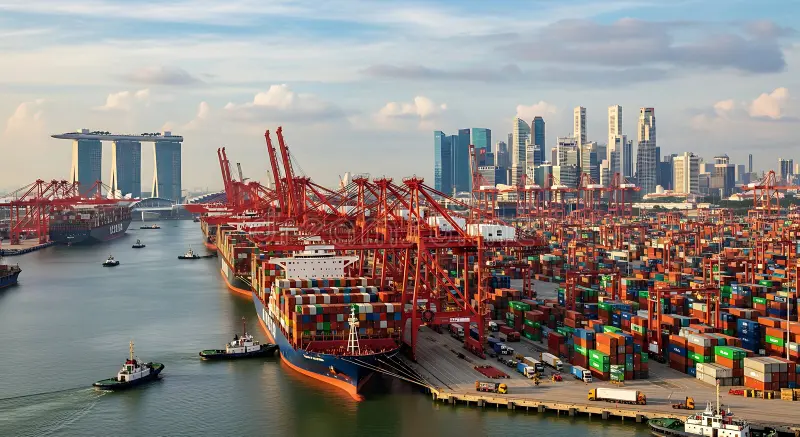
One major reason singapore export opportunities continue to grow is the country’s strategic location. Singapore connects East and West markets through one of the busiest ports on the planet. Huge amounts of goods move through Singapore every single day. Some products are manufactured locally, while others are imported and re-exported to different countries.
And honestly, this creates opportunities for almost everyone. You don’t need to own a factory to benefit from singapore export opportunities. Many companies work as trading businesses, sourcing agents, logistics coordinators, or digital distributors. Some focus on niche industries like halal food exports, medical supplies, or electronics components.
Another important factor is government support. Singapore actively encourages international trade through grants, tax incentives, business development programs, and export assistance schemes. This support makes it easier for businesses to scale internationally without dealing with overwhelming barriers.
The rise of eCommerce has also transformed singapore export opportunities. Businesses can now reach overseas customers directly using platforms like Amazon, Alibaba, Shopify, and regional B2B marketplaces. Digital marketing allows Singapore exporters to build international brands faster than ever before.
So when people talk about singapore export opportunities, they’re really talking about access to a highly connected global business system that supports growth, scalability, and international expansion across multiple industries.
Why Singapore Is a Global Export Powerhouse
Singapore didn’t become a trade giant by accident. The country strategically built its economy around global commerce, logistics, innovation, and international partnerships. Today, singapore export opportunities exist largely because Singapore invested heavily in becoming one of the most efficient business environments in the world.
The first major advantage is infrastructure. Singapore’s ports and airports are among the best globally. Shipping systems operate with incredible speed and reliability. Businesses exporting products from Singapore can move goods faster and more efficiently compared to many other countries in the region. That’s a huge competitive advantage.
Then there’s political and economic stability. International buyers care deeply about consistency. They want suppliers they can trust long-term. Singapore’s stable government, strong legal framework, and business-friendly policies make foreign companies feel secure. This trust creates long-lasting trade relationships.
Free trade agreements also play a massive role in singapore export opportunities. Singapore has agreements with dozens of countries, reducing tariffs and simplifying trade processes. Exporters benefit from lower costs and easier market access. For businesses trying to scale internationally, these agreements can significantly improve profitability.
And honestly, Singapore’s reputation alone helps exporters. Products and services associated with Singapore often carry a perception of quality, professionalism, and reliability. In industries like pharmaceuticals, electronics, fintech, and food safety, this reputation becomes extremely valuable.
Another overlooked factor is talent and innovation. Singapore attracts skilled professionals from around the world. Businesses benefit from expertise in technology, finance, logistics, engineering, and international trade management. This creates stronger export systems and more competitive products.
Digital transformation has strengthened singapore export opportunities even more. Singapore businesses are adopting automation, AI, blockchain logistics, and advanced supply chain systems faster than many competitors. Buyers increasingly prefer suppliers who can offer transparency, tracking, and efficient communication.
Tax efficiency also matters. Singapore’s relatively business-friendly tax environment attracts multinational corporations and international investors. Many companies establish regional headquarters in Singapore, creating even more trade activity and export partnerships.
And then there’s geography. Singapore sits at the heart of Southeast Asia, connecting major Asian economies like China, Indonesia, Malaysia, Vietnam, Thailand, and India. This central position allows exporters to access massive consumer markets efficiently.
Put everything together — infrastructure, stability, innovation, trust, trade agreements, and strategic location — and it becomes obvious why singapore export opportunities continue growing year after year.
Top Industries Driving Singapore Export Opportunities
Some industries dominate singapore export opportunities more than others. And if you’re planning to enter the export market, understanding these sectors can help you identify where the strongest growth potential exists.
Electronics and Semiconductor Exports
Singapore’s electronics sector remains one of the country’s strongest export engines. Semiconductors, integrated circuits, computer components, and precision engineering products are exported globally. Demand continues increasing because modern industries rely heavily on technology.
The global shift toward AI systems, electric vehicles, cloud computing, and automation has further boosted Singapore electronics exports. Businesses supplying advanced components often see strong international demand.
Pharmaceutical and Healthcare Exports
Singapore has built a strong pharmaceutical manufacturing ecosystem. Major global healthcare companies operate facilities there, producing medicines, vaccines, biotech products, and medical devices for international markets.
Healthcare-related singapore export opportunities are growing rapidly due to aging populations, increasing healthcare investments, and demand for high-quality medical products worldwide.
Food and Beverage Exports
Singapore food exports have expanded significantly in recent years. Processed foods, halal-certified products, beverages, seafood, snacks, and specialty food items are increasingly popular in international markets.
Asian food demand is growing globally, and Singapore businesses benefit from strong quality standards and multicultural culinary expertise.
Technology and Digital Services
Not all singapore export opportunities involve physical goods. Software development, fintech solutions, cybersecurity services, AI tools, cloud platforms, and digital consulting services are becoming major export sectors.
Digital exports often have lower operational costs and higher scalability compared to traditional manufacturing exports.
Logistics and Supply Chain Services
Singapore is one of the world’s leading logistics hubs. Companies providing shipping coordination, freight forwarding, warehousing, and supply chain optimization services often work with international clients.
As global trade complexity increases, logistics-related singapore export opportunities continue expanding.
Luxury Goods and Consumer Products
High-end consumer products, beauty products, fashion accessories, and premium lifestyle goods also contribute to Singapore’s export economy. International buyers often associate Singapore with premium quality and authenticity.
And honestly, niche luxury exports can sometimes generate higher profit margins than mass-market products.
Best Products to Export From Singapore
Choosing the right product matters a lot when exploring singapore export opportunities. Some products naturally perform better because of Singapore’s strengths in technology, quality control, branding, and logistics efficiency.
One of the top export categories remains electronics. Semiconductors, circuit boards, sensors, processors, and telecommunications equipment consistently generate strong international demand. Technology companies worldwide depend on reliable suppliers, and Singapore has built a strong reputation in this area.
Pharmaceutical products also rank among the best export opportunities. Singapore manufactures high-quality healthcare products under strict standards. Medical devices, diagnostic equipment, supplements, and biotech products perform particularly well in international markets.
Processed food exports are growing surprisingly fast too. Halal-certified foods, packaged snacks, ready-to-eat meals, sauces, seafood products, and premium beverages have become attractive singapore export opportunities. Global consumers are increasingly interested in Asian flavors and trusted food safety standards.
Luxury beauty and skincare products are another profitable area. Singapore brands focusing on clean beauty, organic ingredients, and premium formulations are gaining international attention. Markets in Southeast Asia and the Middle East especially show strong demand.
Industrial equipment and engineering products also offer stable export potential. Precision machinery, automation systems, robotics components, and industrial solutions continue seeing growth due to increasing automation worldwide.
Digital products deserve attention as well. Software solutions, SaaS platforms, fintech services, cybersecurity systems, and AI-powered tools are technically exports too. Many businesses overlook digital singapore export opportunities even though profit margins can be excellent.
Re-export products represent another interesting business model. Some companies import goods into Singapore, improve packaging or logistics efficiency, and re-export them internationally. Electronics, luxury goods, and industrial supplies commonly follow this model.
But here’s something important — product selection should align with global demand trends. Exporting random products without market research rarely works long-term. Smart exporters analyze international demand, competition, pricing structures, regulations, and logistics costs before entering a market.
And honestly, niche specialization often performs better than trying to compete in oversaturated mass markets. Businesses focusing on unique product categories or premium positioning usually build stronger long-term export success.
How the Singapore Export Process Works
Understanding the export process is essential before entering singapore export opportunities. Many beginners assume exporting is extremely complicated, but Singapore has simplified many systems to make international trade more efficient.
The process usually begins with business registration. Companies need to establish a legal business entity in Singapore before exporting goods internationally. Once registered, exporters may need specific licenses depending on the product category.
After registration comes product sourcing or manufacturing. Some businesses manufacture locally, while others import goods for re-export. Product quality control becomes extremely important because international buyers expect consistency.
The next step involves market research. Successful exporters study target countries carefully. They analyze customer demand, import regulations, competitor pricing, shipping costs, and local distribution systems. Exporting without proper research can quickly become expensive.
Documentation plays a major role in singapore export opportunities. Export permits, invoices, certificates of origin, shipping documents, customs declarations, and compliance paperwork all matter. Singapore’s digital systems help simplify much of this process, though accuracy remains critical.
Shipping and logistics management comes next. Businesses choose between air freight, sea freight, courier shipping, or hybrid logistics models depending on product type and delivery timelines. Singapore’s world-class logistics infrastructure gives exporters major advantages here.
Payment systems also require attention. International trade often involves secure payment methods like letters of credit, wire transfers, trade financing, or escrow services. Risk management becomes important when dealing with overseas buyers.
Marketing and client acquisition are equally essential. Many exporters use trade exhibitions, digital marketing, B2B platforms, LinkedIn networking, and distributor partnerships to find international customers.
Customer support and relationship management matter more than many people realize. Export businesses often grow through repeat clients and long-term partnerships rather than one-time transactions.
And honestly, patience is necessary. Building successful singapore export opportunities usually takes time. International trust isn’t built overnight. Businesses that consistently deliver quality products, reliable communication, and smooth logistics often grow steadily over the long term.
Singapore Export Regulations and Licensing Explained
Regulations might sound boring… but they’re incredibly important when dealing with singapore export opportunities. One compliance mistake can delay shipments, create fines, or damage international business relationships.
Singapore maintains relatively business-friendly export regulations compared to many countries. Still, exporters must follow proper procedures depending on product type, destination market, and international trade rules.
Some products require export permits or licenses. These often include pharmaceuticals, chemicals, military-related goods, strategic technologies, food items, and controlled products. Businesses should verify licensing requirements before shipping internationally.
Customs compliance is another critical area. Exporters must submit accurate declarations, invoices, product descriptions, and tariff classifications. Incorrect information can lead to shipment delays or legal issues.
Certificates of origin often matter too. Many countries provide reduced tariffs under free trade agreements if exporters can prove product origin requirements. Singapore’s trade agreements create strong advantages here.
Food exporters face additional regulations related to hygiene, labeling, packaging, halal certification, and health standards. Pharmaceutical exporters must comply with international safety and quality standards.
And then there are destination-country regulations. Exporters must understand not only Singapore’s rules but also the import laws of the target market. Some countries impose strict packaging, environmental, or product certification requirements.
Thankfully, Singapore provides extensive support resources for exporters. Government agencies, trade consultants, logistics companies, and export advisors help businesses navigate regulatory systems more efficiently.
Digital trade documentation systems have simplified many procedures too. Exporters can manage permits, customs filings, and shipping documentation electronically, reducing administrative complexity.
Still, smart businesses invest time into understanding regulations properly. Compliance isn’t just about avoiding penalties — it builds trust with international buyers and supports long-term growth in singapore export opportunities.
Singapore Export Opportunities for Small Businesses and Startups
A lot of people assume export businesses are only for giant corporations. That’s outdated thinking. Today, singapore export opportunities are more accessible for startups and small businesses than ever before.
Technology changed everything. Small businesses can now reach global customers through digital marketplaces, social media marketing, and eCommerce platforms without massive infrastructure investments.
Niche specialization works particularly well for smaller exporters. Instead of competing directly against huge manufacturers, startups often focus on premium, customized, eco-friendly, or culturally unique products.
Singapore’s startup ecosystem also helps. Government grants, innovation programs, export assistance initiatives, and business accelerators support international expansion. Entrepreneurs can access mentorship, funding, and market-entry resources that significantly reduce risk.
Digital exports create even more opportunities. Software services, design solutions, consulting, education products, AI tools, and digital marketing services can all become international export businesses with relatively low startup costs.
Food startups are also seeing strong international demand. Singapore’s multicultural food culture creates unique export possibilities for sauces, snacks, beverages, frozen meals, and halal-certified products.
Social media branding plays a huge role now. Small exporters can build global audiences using TikTok, Instagram, LinkedIn, YouTube, and online communities. Strong branding sometimes matters just as much as the product itself.
Cross-border partnerships offer another strategy. Small businesses can collaborate with overseas distributors, logistics providers, or regional agents instead of building expensive international offices immediately.
But small businesses must stay realistic too. Exporting requires patience, consistency, and proper planning. Many startups underestimate shipping costs, regulatory requirements, or international competition.
Still, the barriers are lower than ever before. With the right strategy, even a small company can tap into profitable singapore export opportunities and gradually build an international customer base.
Singapore Re-Export Business Model and Why It’s Growing
One of the most interesting singapore export opportunities involves re-exporting. And honestly, many people outside the trade industry don’t fully understand how powerful this business model can become.
A re-export business imports products into Singapore and then exports them again to another country without significant manufacturing changes. Sometimes the products are repackaged, stored temporarily, combined with other shipments, or redistributed strategically.
Singapore dominates this space because of its world-class logistics infrastructure. Goods move quickly through Singapore ports, customs systems, and supply chains. This efficiency creates strong advantages for international trade operations.
Electronics are among the most common re-export products. Businesses source components or devices from manufacturers, store them in Singapore distribution hubs, and then ship them to different global markets.
Luxury goods also follow this model frequently. Singapore’s reputation for authenticity and quality assurance helps international buyers feel more confident purchasing through Singapore-based distributors.
Industrial equipment, machinery parts, chemicals, and medical supplies are other major re-export categories. Some companies act as regional distribution centers for multinational brands across Southeast Asia.
The re-export business model reduces manufacturing complexity while still generating strong profits. Businesses focus more on logistics optimization, supplier relationships, inventory management, and market access.
Digital systems further strengthen re-export singapore export opportunities. Real-time tracking, AI-powered logistics software, and automated warehousing improve operational efficiency significantly.
Free trade agreements also support re-export businesses by simplifying tariff structures and customs procedures between countries.
However, competition can be intense. Re-export businesses succeed through operational efficiency, relationship management, competitive pricing, and reliable delivery systems. Margins may sometimes be lower than manufacturing businesses, but scalability can be impressive.
And honestly, many successful Singapore trading companies quietly built massive international operations through re-export models rather than traditional manufacturing.
Costs and Investment Needed for Export Business in Singapore
One of the biggest questions people ask about singapore export opportunities is simple: how much money do you actually need?
The answer depends heavily on the business model. Some export businesses require significant capital investment, while others can start relatively lean.
Manufacturing exports usually involve higher startup costs. Equipment, factory space, staff, certifications, packaging systems, and inventory create major expenses. Industries like electronics or pharmaceuticals may require millions in investment.
But trading or distribution-based export businesses can start much smaller. Some entrepreneurs begin with sourcing partnerships, limited inventory, and digital sales channels before scaling gradually.
Key startup expenses often include:
- Business registration
- Licensing and permits
- Inventory or product sourcing
- Warehousing
- Packaging and branding
- Shipping and logistics
- Digital marketing
- Website development
- Trade compliance support
- Insurance
Shipping costs are especially important. International freight rates fluctuate constantly depending on fuel prices, global demand, shipping routes, and geopolitical conditions.
Marketing budgets also matter more than beginners expect. Finding international customers takes effort. Businesses often invest in B2B lead generation, online advertising, trade exhibitions, distributor partnerships, and SEO content marketing.
Cash flow management becomes critical in export businesses because payment cycles can be slower internationally. Businesses may wait weeks or months for overseas payments depending on contract terms.
Thankfully, Singapore offers financial support programs for exporters. Grants, trade financing schemes, export insurance, and SME assistance initiatives help reduce financial pressure.
Digital exports generally require lower investment compared to physical products. Software companies, consultants, and online service providers can often scale internationally with lower operational overhead.
And honestly, starting small isn’t a weakness. Many successful exporters began with focused niche products and gradually expanded operations as international demand increased.
Best Markets for Singapore Export Expansion
Choosing the right market is one of the most important decisions in singapore export opportunities. Some countries naturally align better with Singapore’s strengths, logistics networks, and trade relationships.
Southeast Asia
Regional markets remain highly attractive. Countries like Indonesia, Malaysia, Vietnam, Thailand, and the Philippines continue experiencing economic growth and rising consumer demand.
Singapore businesses often have cultural familiarity, logistical advantages, and strong regional networks that simplify expansion into Southeast Asia.
China
China remains one of the largest opportunities for Singapore exporters, especially in technology, luxury products, healthcare, financial services, and premium consumer goods.
However, competition in China can be intense. Businesses entering the Chinese market usually need strong localization strategies.
Middle East
The Middle East offers strong demand for halal food products, healthcare solutions, luxury goods, construction materials, and logistics services.
Singapore’s reputation for quality and reliability resonates well with Middle Eastern buyers.
Europe
European markets value high standards, sustainability, and innovation. Singapore exporters in healthcare, technology, sustainability products, and specialty foods often perform well there.
Trade compliance requirements may be stricter, but profit margins can also be attractive.
United States
The US market offers enormous scale for singapore export opportunities. Technology products, software services, medical devices, and niche consumer brands can see strong growth.
Still, entering the US market requires careful branding, compliance, and competitive positioning.
Africa
Africa is becoming increasingly important for future export expansion. Infrastructure development, urbanization, and rising consumer demand create new opportunities across industries.
And honestly, businesses that enter emerging markets early often gain strong long-term advantages before competition intensifies.
Digital and Technology-Based Export Opportunities
Traditional exports still matter, but digital singapore export opportunities are growing at an incredible pace. And this shift is changing how international trade works.
Software exports represent one of the fastest-growing areas. Singapore companies develop SaaS platforms, fintech systems, cybersecurity tools, AI solutions, and enterprise software for global clients.
The beauty of digital exports is scalability. A software company can serve international customers without dealing with physical shipping logistics.
Fintech is especially strong in Singapore. The country’s advanced financial ecosystem supports innovation in digital payments, blockchain systems, online banking solutions, and investment technology.
Education exports are growing too. Online courses, consulting services, corporate training programs, and digital learning platforms allow Singapore businesses to reach global audiences.
Creative industries also contribute to singapore export opportunities. Design agencies, marketing firms, animation studios, content creators, and branding consultants increasingly work with international clients remotely.
Cloud computing and AI services continue expanding rapidly. Businesses worldwide need automation, analytics, cybersecurity, and digital infrastructure solutions.
eCommerce enables product-based exporters to scale internationally faster as well. Direct-to-consumer global selling removes some traditional distribution barriers.
And honestly, younger entrepreneurs often find digital export models more attractive because startup costs are lower and growth potential can be massive.
Still, competition in digital markets moves quickly. Businesses must constantly innovate, improve customer experience, and build strong online visibility.
Singapore Export Opportunities vs Other Asian Markets
People often compare singapore export opportunities with countries like China, Vietnam, Malaysia, Thailand, or India. Each market has strengths, but Singapore operates differently.
China dominates manufacturing scale. Vietnam offers lower labor costs. India provides massive workforce potential. But Singapore competes through efficiency, trust, innovation, and global connectivity.
Singapore’s infrastructure is usually superior. Shipping systems, customs processes, legal protections, and business services operate more smoothly than many neighboring markets.
Political stability also gives Singapore advantages. International businesses value predictability when managing global supply chains.
And then there’s branding power. Products associated with Singapore often carry higher perceived quality compared to lower-cost manufacturing markets.
However, Singapore generally has higher operational costs. Labor, office space, and certain business expenses can exceed regional competitors. This means Singapore businesses often focus on premium positioning rather than low-cost competition.
Technology adoption also differentiates Singapore. Automation, digital trade systems, smart logistics, and innovation ecosystems help businesses operate more efficiently.
For businesses prioritizing quality, speed, reliability, and international reputation, singapore export opportunities often provide stronger long-term advantages despite higher costs.
Expert Strategies to Grow an Export Business
Growing an export business requires more than just finding buyers. Long-term success in singapore export opportunities depends on strategy, consistency, and adaptability.
One of the smartest strategies is niche positioning. Instead of competing broadly, successful exporters often specialize deeply in specific product categories or customer segments.
Relationship-building matters enormously in international trade. Strong distributor partnerships, reliable communication, and trust-based business relationships often drive repeat orders and referrals.
Branding is another overlooked factor. Many exporters focus only on price competition, but premium branding can dramatically improve margins and customer loyalty.
Localization helps too. Businesses should adapt marketing, packaging, and messaging for different cultural markets rather than using identical strategies everywhere.
Trade exhibitions remain valuable despite digital growth. Face-to-face networking still plays a huge role in international B2B relationships.
SEO and digital marketing are increasingly essential for singapore export opportunities. International buyers actively search online for suppliers, distributors, and product solutions. Businesses with strong online visibility gain major advantages.
Diversification reduces risk. Relying too heavily on one country or customer can become dangerous if market conditions change.
And honestly, continuous learning matters. Global trade evolves constantly. Exporters who stay informed about regulations, technology, logistics trends, and consumer demand adapt faster.
Common Mistakes Exporters Must Avoid
Even promising singapore export opportunities can fail if businesses make avoidable mistakes.
One major mistake is poor market research. Some exporters assume international demand exists without validating customer needs, competition, or pricing structures.
Another common issue involves underestimating logistics complexity. Shipping delays, customs problems, damaged goods, and poor inventory management can quickly hurt profitability.
Compliance mistakes are dangerous too. Incorrect documentation or failure to meet regulatory standards can lead to shipment delays or legal problems.
Some businesses focus only on price competition. That approach often creates unsustainable margins and weak customer loyalty.
Ignoring branding is another mistake. International buyers often judge professionalism based on packaging, website quality, communication, and presentation.
Cash flow mismanagement causes serious problems as well. International payment cycles can be slow, and businesses must plan finances carefully.
Overexpansion also hurts some exporters. Trying to enter too many markets too quickly can stretch operations beyond manageable limits.
And honestly, lack of patience ruins many export businesses before they mature. Building strong international partnerships takes time.
Future Trends in Singapore Export Opportunities
The future of singapore export opportunities looks extremely promising, though the landscape is evolving rapidly.
Technology integration will continue reshaping trade. AI-powered logistics, blockchain tracking systems, smart warehousing, and automation will improve operational efficiency.
Sustainability is becoming increasingly important. International buyers now prioritize environmentally responsible suppliers, packaging systems, and production methods.
Digital exports will likely grow even faster. Software services, fintech solutions, AI tools, and online consulting businesses may eventually outpace some traditional export sectors.
Healthcare exports should remain strong due to aging populations and rising healthcare investments worldwide.
Regional trade within Asia is expected to increase significantly. Southeast Asia’s growing middle class creates expanding consumer demand across industries.
Supply chain diversification trends also benefit Singapore. Many companies want alternatives to overly concentrated manufacturing systems, creating new trade partnerships.
Food security and halal-certified products represent additional growth areas. Demand for trusted food suppliers continues rising globally.
And honestly, businesses that combine innovation, branding, technology, and operational efficiency will probably dominate the next phase of singapore export opportunities.
Frequently Asked Questions
Is Singapore a good country for starting an export business?
Yes, Singapore is considered one of the best global trade hubs due to strong infrastructure, political stability, advanced logistics systems, and international trade agreements. Many businesses use Singapore as a gateway to Asian and global markets.
What are the best products for Singapore export opportunities?
Electronics, pharmaceuticals, processed foods, halal products, software services, luxury goods, industrial equipment, and fintech solutions are among the strongest export sectors.
Do small businesses benefit from singapore export opportunities?
Absolutely. Small businesses can use eCommerce platforms, niche branding, digital marketing, and distributor partnerships to access international markets without massive investments.
How much investment is needed to start exporting from Singapore?
Investment varies depending on the business model. Digital exports may require relatively low startup costs, while manufacturing exports often involve higher capital requirements.
What makes Singapore different from other export markets?
Singapore stands out because of efficiency, trust, strong regulations, global connectivity, advanced infrastructure, and premium international reputation.
Are digital services considered exports in Singapore?
Yes. Software, consulting, fintech services, online education, digital marketing, and AI solutions are all considered export services when sold internationally.
Final Thoughts
Singapore continues proving why it’s one of the world’s most powerful trade hubs. The range of singapore export opportunities available today is honestly impressive — from electronics and healthcare to digital services, food products, logistics, and technology solutions.
What makes Singapore truly unique isn’t just geography or infrastructure. It’s the combination of trust, innovation, efficiency, and global connectivity. Businesses worldwide actively seek reliable partners, and Singapore consistently delivers that reputation.
And the opportunities are no longer limited to giant corporations. Startups, SMEs, online businesses, and specialized niche brands can now access international markets more easily than ever before.
Still, success in singapore export opportunities doesn’t happen automatically. Businesses need strong market research, branding, compliance systems, logistics planning, and long-term relationship-building strategies.
The exporters who will dominate the next few years are likely the ones combining technology, adaptability, customer experience, and operational excellence. Global trade is evolving fast… but Singapore remains positioned right at the center of that transformation.
If you’re planning to enter international trade, now may actually be one of the best times to explore singapore export opportunities seriously. The global market keeps expanding — and businesses that move early often gain the biggest long-term advantage.