
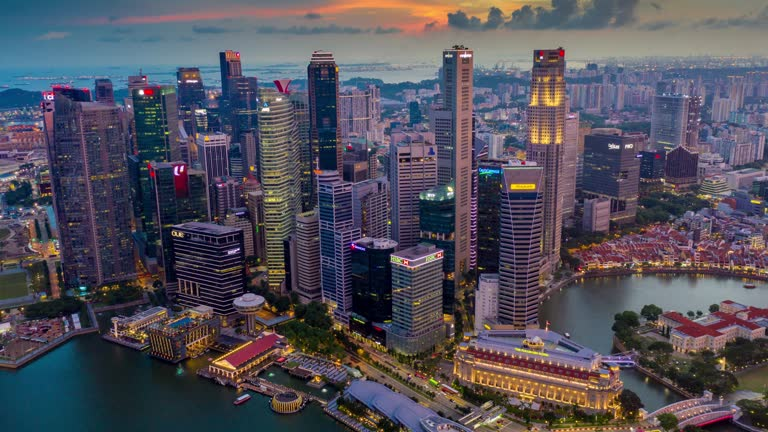
The Singapore service sector is not just a part of the economy—it is the entire foundation of how modern Singapore functions, grows, and competes globally. When people look at Singapore from the outside, they often see a clean city, advanced infrastructure, strong law enforcement, and a high standard of living. But underneath all of that is something far more powerful: a deeply integrated service-based economy that drives everything.
The Singapore service sector includes finance, banking, insurance, tourism, healthcare, education, logistics, IT services, consulting, and digital innovation. It is not a single industry—it is a full ecosystem where every part supports another.
And here’s something most people don’t realize… this sector is not static. It is constantly evolving. In 2026, the Singapore service sector is going through one of its fastest transformations ever due to artificial intelligence, fintech disruption, global digital trade, and remote service expansion.
If you search phrases like “Singapore service sector growth 2026,” “Singapore service economy jobs,” or “future of Singapore service industry,” what you are really trying to understand is how a small country became one of the world’s most powerful economic hubs without relying heavily on manufacturing or natural resources.
The answer lies in services—high-value, knowledge-driven services that scale globally.
And this article is going to go much deeper than surface explanations. We are going to break down structure, industries, salaries, job opportunities, challenges, future predictions, and even real-world working mechanisms of the Singapore service sector.
By the end, you will not just understand it—you will see how it actually runs like a global machine.
What is the Singapore Service Sector?
The Singapore service sector refers to all economic activities that provide services rather than physical products. This includes banking, insurance, healthcare, tourism, logistics, education, IT services, and professional consulting.
But in reality, the Singapore service sector is much bigger than that definition.
It is the core system that manages money flow, global trade routes, digital infrastructure, human capital, and international business operations.
When people search “what is Singapore service sector meaning,” they are usually surprised to find that more than two-thirds of Singapore’s GDP comes from services. That means most economic activity in the country is not about manufacturing goods—it is about managing information, transactions, people, and systems.
For example:
- A bank manages global capital movement
- A hospital manages healthcare services
- A logistics company manages global supply chains
- A university manages international education services
- A tech firm manages digital platforms and AI systems
All of these belong to the Singapore service sector.
The most important thing to understand is this: services are scalable. A single financial system in Singapore can handle billions of dollars across continents without producing a physical item. That is what makes this economy so powerful.
Expanding the Singapore Service Sector: Why It Dominates Modern Economies
To really understand the Singapore service sector, you have to go beyond definitions and look at how it actually shapes everyday life, business decisions, and even international trade flows. What makes Singapore unique is not just that it has a strong service economy—it is that the entire country is structurally designed around services from the ground up.
In most countries, services are just one part of the economy. But in Singapore, services are the engine, the system, and the strategy all at once. Everything connects back to it.
For example, when a multinational company wants to expand into Asia, it often chooses Singapore as its regional headquarters. Why? Because the Singapore service sector provides stability, efficiency, legal transparency, strong financial infrastructure, and fast digital systems. That combination is extremely rare in global markets.
And this is where things start getting interesting… because the service sector in Singapore is not just “supporting” the economy—it is actively shaping global business flows.
Companies don’t just come here to operate. They come here to scale.
This includes industries like:
- Global banking and wealth management
- International logistics and shipping coordination
- Digital payment systems and fintech platforms
- Cross-border consulting and advisory services
- High-end healthcare and medical tourism
- Global education and student services
All of these industries are interconnected under the broader umbrella of the Singapore service sector, creating a system where one industry strengthens the other.
The Hidden Structure Behind Singapore’s Service Power
When people hear “service sector,” they often imagine simple jobs like customer support or hospitality. But in Singapore, the structure is far more advanced and layered.
The Singapore service sector operates like a multi-level digital ecosystem.
At the top level, you have strategic financial control. This includes central banking systems, investment management, global asset flows, and insurance networks. These are not small operations—they involve billions of dollars moving through Singapore every single day.
Then you move into mid-level service infrastructure. This includes logistics networks, trade facilitation, corporate consulting, legal advisory services, and professional business services. These industries ensure that global companies can operate smoothly.
At the ground level, you have consumer-facing services like tourism, retail, restaurants, hotels, healthcare clinics, and education institutions. These are the visible parts of the economy that people interact with daily.
But the real strength of the Singapore service sector comes from how these layers connect seamlessly.
For example:
- A bank provides financing to a logistics company
- The logistics company supports tourism imports and exports
- Tourism increases demand for hospitality services
- Hospitality depends on digital booking systems
- Digital systems are powered by IT service companies
This cycle continues endlessly, creating a self-reinforcing economy.
That is why economists often describe Singapore as a “services-integrated economy” rather than just a service-based economy.
Why Singapore Became a Global Service Hub
The rise of the Singapore service sector did not happen by accident. It was built through decades of strategic planning.
One of the biggest reasons is location. Singapore sits at the crossroads of major global shipping routes. This made it a natural logistics hub even before modern development.
But location alone was not enough.
The government invested heavily in:
- Education systems to build skilled workers
- Financial regulation frameworks to attract global banks
- Infrastructure like ports, airports, and digital networks
- Business-friendly laws and taxation systems
- Political and economic stability
These factors created trust—and in the service world, trust is everything.
If global companies cannot trust a country’s financial system, legal system, or operational stability, they will not invest there. Singapore solved this problem early.
That is why today, the Singapore service sector is one of the most trusted business environments in the world.
Another key factor is adaptability. Singapore does not stick to old systems. It constantly upgrades itself.
For example:
- Traditional banking → now fintech and digital banking
- Manual logistics → now AI-powered supply chain systems
- Physical education systems → now hybrid digital learning models
- Traditional healthcare → now smart hospitals and telemedicine
This constant evolution keeps the service sector relevant and globally competitive.
The Economic Engine: How Services Create Real Wealth
A common misunderstanding is that service industries are “less real” than manufacturing. But in Singapore’s case, services are actually the primary wealth generator.
Let’s break this down simply.
A manufacturing economy creates value by producing physical goods. But it is limited by materials, production speed, and physical logistics.
A service economy like Singapore creates value through:
- Financial transactions
- Knowledge transfer
- Digital systems
- Global coordination
- Intellectual services
This means value is not tied to physical output.
For example:
A single financial transaction in Singapore’s banking system can move millions of dollars across continents instantly. No physical product is created, but massive economic value is generated.
Similarly:
- A consulting firm can advise global companies
- A tech firm can build software used worldwide
- A logistics company can coordinate global supply chains
- A university can educate international students
Each of these activities generates income, employment, and economic growth.
This is why the Singapore service sector contributes such a large share of GDP.
It is not about quantity—it is about value per transaction.
Employment and Human Capital in the Service Sector
One of the strongest foundations of the Singapore service sector is its workforce.
Unlike manufacturing economies that rely heavily on manual labor, Singapore focuses on high-skill employment.
This includes:
- Financial analysts and bankers
- IT engineers and software developers
- Healthcare professionals
- Logistics and supply chain managers
- Education specialists
- Business consultants
But the interesting part is how Singapore invests in people.
The country has built a system where education and skills training are directly aligned with industry needs. This means workers are continuously upgraded to match global demand.
For example:
- Banking employees are trained in fintech systems
- Logistics workers learn AI-based tracking systems
- Healthcare workers learn digital patient management tools
- Students are trained in digital literacy from early education
This creates a workforce that is flexible, adaptive, and globally competitive.
Because of this, the Singapore service sector does not suffer from skill stagnation like many other countries.
Digitalization: The Biggest Transformation of the Service Economy
If there is one factor that is reshaping everything right now, it is digital transformation.
The Singapore service sector is becoming fully digital across all industries.
In banking:
- Mobile banking apps replace physical branches
- AI detects fraud in real time
- Blockchain improves transaction security
In healthcare:
- Digital patient records
- Telemedicine consultations
- AI-based diagnosis support
In logistics:
- Real-time tracking systems
- Automated warehouses
- AI route optimization
In education:
- Online learning platforms
- Hybrid classrooms
- Digital certification systems
This transformation is not optional—it is necessary for survival in global competition.
And Singapore is one of the fastest adopters of these technologies.
Global Trade and Singapore’s Strategic Position
Another reason the Singapore service sector is so powerful is its role in global trade.
Singapore acts as a bridge between East and West economies. Goods, money, and data flow through the country continuously.
Its port is one of the busiest in the world, and its airport is a major global transit hub.
But beyond physical movement, Singapore also handles:
- Financial trade flows
- Digital transactions
- International contracts
- Cross-border consulting services
This makes it a true global service hub.
Companies that operate internationally often rely on Singapore for coordination, regulation, and financial management.
Why the Singapore Service Sector Will Keep Growing
The future of the Singapore service sector looks extremely strong because global economies are becoming more service-driven.
Key drivers include:
- Rise of AI and automation
- Growth of digital economies
- Expansion of global remote services
- Increasing demand for financial hubs
- Growth of healthcare and education exports
Singapore is already positioned at the center of all these trends.
So instead of slowing down, the service sector is likely to expand further in the next decade.
Historical Evolution of Singapore Service Economy
The Singapore service sector did not become powerful overnight. It evolved over decades.
In the early stages, Singapore focused heavily on trade and port activities. Its geographical location made it a natural shipping hub. Goods from East and West passed through its ports.
But over time, leaders realized something important: physical trade alone would not guarantee long-term stability.
So Singapore began shifting toward services:
- Banking systems were developed
- Education systems were upgraded
- Healthcare infrastructure was expanded
- Tourism was heavily promoted
- Foreign investment policies were introduced
By the 1990s, Singapore had already started becoming a global financial center.
In the 2000s, digital transformation began. Internet banking, online services, and global consulting industries expanded rapidly.
Now in 2026, the Singapore service sector is fully digital, globally integrated, and AI-driven.
This transformation did not happen randomly. It was planned, structured, and continuously improved.
Structure of Singapore Service Sector
The structure of the Singapore service sector is layered and interconnected.
1. Financial Core Layer
This is the strongest layer. It includes:
- Banks
- Investment firms
- Insurance companies
- Wealth management services
- Fintech startups
This layer controls capital flow across Asia and the world.

2. Trade and Logistics Layer
Singapore is one of the busiest shipping hubs globally. This layer includes:
- Shipping companies
- Air cargo systems
- Port operations
- Supply chain management
3. Social Services Layer
This includes:
- Healthcare
- Education
- Public administration
- Social development services
4. Consumer Services Layer
This includes:
- Tourism
- Hospitality
- Retail
- Food services
5. Digital Services Layer
This is the fastest-growing layer:
- Artificial intelligence systems
- Cloud computing
- Cybersecurity
- Software development
- Fintech systems
All these layers interact with each other. That’s why the Singapore service sector is not just strong—it is extremely stable.
Major Industries in Singapore Service Sector
The Singapore service sector includes multiple high-value industries:
Financial Services
Singapore is a global banking hub. It handles billions in transactions daily. Wealth management and investment services are key contributors.
Tourism and Hospitality
Millions of tourists visit every year, supporting hotels, airlines, and entertainment industries.
Healthcare Services
Singapore is a medical tourism destination known for advanced treatments and hospitals.
Education Services
International students come from all over Asia to study in Singapore.
Logistics and Shipping
Due to its strategic location, Singapore plays a critical role in global trade.
IT and Digital Services
The fastest-growing sector, including AI, fintech, and cybersecurity.
Each of these industries contributes significantly to GDP and employment.
Economic Importance and GDP Contribution
The Singapore service sector contributes more than 65–70% of total GDP.
This dominance is rare globally.
Why is it so important?
Because it:
- Generates most national income
- Attracts foreign investment
- Creates millions of jobs
- Stabilizes economic cycles
- Supports global trade systems
Even during global crises, the service sector remains more stable than manufacturing.
How Singapore Service Sector Works Internally
The system works like a highly efficient machine.
Government policies create stability.
Financial systems manage capital flow.
Digital infrastructure connects everything.
Skilled labor executes operations.
Global networks bring international business.
Everything is connected.
If one sector grows, others benefit automatically.
That is why the Singapore service sector is so resilient.
Growth Trends 2026 and Beyond
In 2026, several trends are shaping the future:
- AI automation in finance and healthcare
- Fintech revolution in banking
- Digital trade expansion
- Remote global services
- Sustainable green finance
- Smart city integration
The Singapore service sector is moving toward full digital transformation.
Job Market and Salary Breakdown
Jobs in the Singapore service sector include:
- Financial analysts
- Software engineers
- Cybersecurity experts
- Healthcare professionals
- Hospitality workers
- Logistics managers
Salary ranges vary:
- Entry-level: moderate income
- Mid-level: competitive global salaries
- Senior roles: very high-paying positions
Foreign professionals also find opportunities in many service industries.
Digital Transformation and AI Impact
AI is changing everything:
- Banks use AI for fraud detection
- Hospitals use AI for diagnosis
- Logistics uses AI for route optimization
- Companies use AI for customer service
This makes the Singapore service sector faster and smarter.
Comparison with Manufacturing Economy
Manufacturing depends on physical goods.
Services depend on knowledge and systems.
Services scale faster globally without physical limitations.
That is why Singapore shifted toward services.
Foreign Investment and Global Trade Role
Singapore attracts global companies because of:
- Stability
- Strong laws
- Tax efficiency
- Skilled workforce
- Global connectivity
This strengthens the Singapore service sector further.
Challenges and Risks
Despite success, challenges exist:
- Rising costs
- Talent shortages
- Global competition
- Cybersecurity threats
These must be managed carefully.
Business Opportunities
Opportunities exist in:
- Fintech startups
- AI services
- Healthcare innovation
- Digital consulting
- Tourism tech
Case Study: Why Singapore Became a Global Service Hub
Singapore succeeded because it:
- Focused on education
- Built strong governance
- Invested in infrastructure
- Attracted foreign companies
- Embraced digital transformation early
Future Forecast 2030
By 2030:
- AI will dominate services
- Digital economy will expand
- Remote global services will grow
- Singapore will remain top financial hub
FAQs
1. What is Singapore service sector?
It is the economy based on services like finance, IT, tourism, and healthcare.
2. Why is it important?
It contributes most of Singapore’s GDP.
3. Is it growing?
Yes, especially digital services.
4. What jobs exist?
Finance, IT, healthcare, logistics, hospitality.
5. Future outlook?
Highly digital and AI-driven.
Conclusion
The Singapore service sector is the foundation of Singapore’s entire success story. It drives GDP, creates jobs, attracts global investment, and connects Singapore to the world economy.
As 2026 progresses, this sector will continue evolving into a more digital, intelligent, and globally integrated system.
It is not just an economy—it is a global service engine.