The psle chinese paper is one of the most important components of Singapore’s Primary School Leaving Examination. It assesses a student’s ability to communicate effectively in Chinese through writing, comprehension, listening, and oral communication.
Many students find Chinese challenging because it requires strong vocabulary, grammar, reading, and speaking skills. However, with the right preparation methods and study techniques, students can significantly improve their performance.
This guide explains the structure of the psle chinese paper, scoring components, effective revision methods, common mistakes, and practical strategies that help students achieve better results. Whether you are a parent supporting your child or a student preparing for the examination, this article provides a complete roadmap for success.
PSLE Chinese Exam Format Explained
Understanding the structure of the psle chinese paper is the first step toward effective preparation. The examination is designed to evaluate language proficiency across multiple skills.
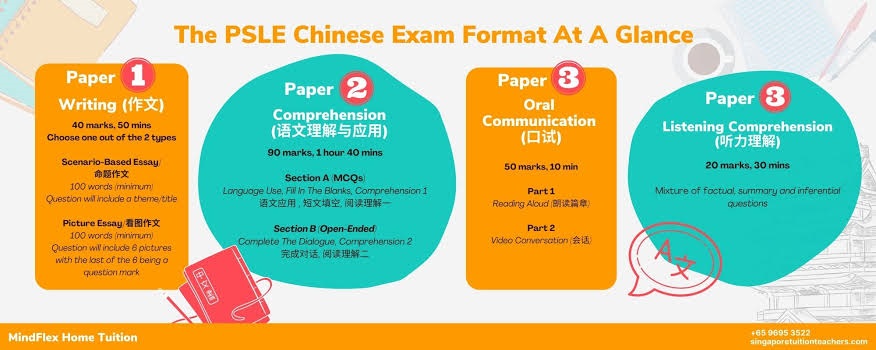
According to Singapore’s examination framework, the Chinese examination consists of four main components.
Paper 1: Composition Writing
This section tests:
- Creative writing ability
- Vocabulary usage
- Sentence structure
- Story development
Students are typically required to write a composition based on pictures or a given topic.
Paper 2: Language Use and Comprehension
This paper focuses on:
- Vocabulary
- Grammar
- Cloze passages
- Reading comprehension
Many educators consider this the most demanding section because it requires strong reading and analytical skills.
Paper 3: Listening Comprehension
Students listen to audio recordings and answer questions based on what they hear.
Key skills include:
- Attention to detail
- Listening accuracy
- Understanding spoken Chinese
Paper 4: Oral Examination
The oral component assesses:
- Reading aloud
- Pronunciation
- Fluency
- Conversation skills
Oral communication remains a significant scoring opportunity for many students.
Effective PSLE Chinese Revision Strategies
Preparing for the psle chinese paper requires consistency rather than last-minute studying.
Students who build strong habits throughout the year often perform better than those who rely solely on intensive revision sessions.
Create a Weekly Study Plan
A balanced revision schedule should include:
- Reading practice
- Composition writing
- Oral exercises
- Vocabulary revision
- Listening practice
Studying a little each day is usually more effective than long weekend sessions.
Focus on Weak Areas
Identify sections where marks are frequently lost.
For example:
- Vocabulary mistakes
- Comprehension errors
- Weak oral responses
- Poor composition structure
Targeted practice helps improve scores faster.
Practice Past-Year Papers
Past examination papers help students:
- Understand question patterns
- Improve time management
- Build confidence
- Identify recurring topics
Many successful students regularly practise under exam conditions.
How to Improve Chinese Composition Writing
Composition writing often determines whether students achieve higher achievement levels.
A strong composition demonstrates creativity, organisation, and language proficiency.
Plan Before Writing
Spend a few minutes planning:
- Introduction
- Main events
- Conclusion
A clear structure helps ideas flow logically.
Expand Vocabulary
Students should regularly learn:
- 成语 (idioms)
- Descriptive phrases
- Transition words
- Emotion-related vocabulary
Using appropriate expressions can make writing more engaging.
Develop Interesting Storylines
Examiners appreciate compositions that:
- Show clear progression
- Include meaningful lessons
- Create emotional impact
- Maintain logical flow
Avoid unrealistic plots that distract from the story.
Review and Edit
Always reserve time to:
- Check grammar
- Correct spelling
- Improve sentence structure
Small corrections can prevent unnecessary mark deductions.
Mastering Chinese Reading Comprehension
Reading comprehension is often one of the most heavily weighted areas of the psle chinese paper. Strong comprehension skills can significantly influence overall performance.
Read Questions First
Before reading the passage:
- Review the questions
- Identify keywords
- Understand what information is required
This approach improves efficiency.
Highlight Important Details
While reading, look for:
- Main ideas
- Supporting details
- Cause-and-effect relationships
- Character motivations
These details often form the basis of comprehension questions.
Avoid Guessing
Students frequently lose marks because they answer based on assumptions.
Instead:
- Refer directly to the text
- Support answers with evidence
- Use complete responses where necessary
Build Reading Habits
Regular reading strengthens:
- Vocabulary
- Understanding
- Sentence recognition
- Analytical thinking
Even fifteen minutes of daily reading can produce noticeable improvements over time.
Oral Examination Tips for Better Scores
Many students underestimate the importance of oral communication.
However, the oral component contributes significantly to the final result.
Improve Reading Aloud Skills
Focus on:
- Pronunciation
- Intonation
- Expression
- Pacing
Reading too quickly can affect clarity.
Practise Daily Conversations
Speaking Chinese regularly improves:
- Confidence
- Fluency
- Vocabulary recall
- Response quality
Students should discuss everyday topics with family members whenever possible.
Use Structured Responses
For conversation questions:
- State your opinion.
- Explain your reason.
- Give an example.
- Conclude clearly.
This method helps students provide complete answers.
Stay Calm During the Examination
Confidence often affects performance.
Remember to:
- Listen carefully
- Pause before answering
- Speak clearly
- Maintain eye contact
Common Mistakes Students Make
Understanding common errors can help students avoid unnecessary mark losses in the psle chinese paper.
Memorising Without Understanding
Memorisation alone is insufficient.
Students should understand:
- Vocabulary meanings
- Context usage
- Sentence structures
Ignoring Oral Practice
Some students focus entirely on written papers.
This can lead to missed scoring opportunities during oral examinations.
Poor Time Management
Running out of time often affects:
- Composition quality
- Comprehension accuracy
- Final checking
Timed practice is essential.
Limited Vocabulary Exposure
Students who rarely read Chinese materials may struggle with:
- New words
- Complex passages
- Advanced expressions
Regular exposure helps build familiarity.
Best Resources for PSLE Chinese Preparation
Choosing suitable learning resources can improve study effectiveness.
Recommended options include:
School Materials
Teachers often provide:
- Worksheets
- Revision packages
- Practice papers
These materials align closely with syllabus requirements.
Assessment Books
Good assessment books offer:
- Topic-based exercises
- Model answers
- Exam techniques
Use them consistently rather than collecting too many resources.
Digital Learning Platforms
Online tools provide:
- Interactive exercises
- Vocabulary quizzes
- Listening practice
These resources can complement traditional learning methods.
Reading Materials
Useful reading materials include:
- Chinese newspapers
- Storybooks
- Educational magazines
Regular reading expands vocabulary naturally.
Preparing for the Final Months Before the Exam
The final preparation period is crucial for success in the psle chinese paper.
Students should focus on refining existing skills rather than learning large amounts of new material.
Review Mistakes
Maintain an error notebook containing:
- Vocabulary mistakes
- Grammar errors
- Comprehension weaknesses
Regular review prevents repeated mistakes.
Complete Mock Exams
Simulate actual exam conditions by:
- Timing each paper
- Avoiding interruptions
- Reviewing performance afterward
Maintain Consistency
Daily revision remains more effective than occasional intensive study sessions.
Small efforts accumulate into significant improvements over time.
FAQs
1. What is included in the PSLE Chinese paper?
The PSLE Chinese paper includes composition writing, language use and comprehension, listening comprehension, and oral communication components.
2. How can students improve their PSLE Chinese paper results?
Students can improve by practising past papers, reading Chinese materials regularly, expanding vocabulary, and developing strong oral communication skills.
3. Which section of the PSLE Chinese paper is the most challenging?
Many students find comprehension and language use sections challenging because they require strong vocabulary and analytical skills.
4. How often should students practise oral Chinese?
Daily speaking practice is ideal. Even short conversations help improve fluency and confidence.
5. Are past-year papers useful for PSLE Chinese preparation?
Yes. Past papers help students understand question formats, improve timing, and identify common examination patterns.
Conclusion
Success in the psle chinese paper requires a combination of consistent effort, smart revision techniques, and regular exposure to the Chinese language. Students who understand the examination format, strengthen their vocabulary, practise oral communication, and complete past-year papers are often better prepared for exam day.
Rather than focusing solely on memorisation, students should aim to develop genuine language skills. Reading regularly, writing compositions consistently, and engaging in meaningful Chinese conversations can create long-term improvements that extend beyond the examination itself.
Parents also play an important role by encouraging positive study habits and providing a supportive learning environment. With structured preparation and a clear strategy, students can approach the psle chinese paper with greater confidence and achieve their desired results.
Start implementing these strategies today to build stronger Chinese language skills and improve examination performance.