If you’ve ever wandered through Joo Chiat Road, you’ll know it doesn’t feel like the rest of Singapore. One minute you’re looking at pastel-colored Peranakan shophouses, the next you’re standing outside a modern café serving oat milk lattes. That mix is exactly why Joo Chiat stands out in East Coast Singapore.
Everything—history, food, hidden corners, and what makes this stretch more than just a pretty street. Whether you’re planning a weekend trip or just curious, you’ll walk away knowing how to experience Joo Chiat Road like a local, not a tourist ticking boxes.
What makes Joo Chiat Road such a unique heritage street in Singapore
The story of Joo Chiat Road starts long before cafés and Instagram photos. It was once part of coconut plantations and quiet coastal land in the early 1900s. Over time, it transformed into a residential hub shaped strongly by Peranakan culture.
Today, when people talk about Joo Chiat , they’re really talking about a living museum. The shophouses here aren’t just preserved buildings—they’re still used as homes, shops, and restaurants. That’s what makes the area feel alive instead of staged.
One important figure tied to the area is Chew Joo Chiat, a wealthy landowner after whom the road is named. His influence helped shape early development in this part of Katong.
What this means is simple: Joo Chiat is not frozen in time. It’s a place where heritage conservation meets everyday life. You’ll see families living upstairs in heritage homes while cafés and boutiques operate downstairs.
That blend is why conservation rules are strict here. The Peranakan shophouses are protected, keeping their colorful tiles, ornate windows, and unique architectural details intact.
Walking through Joo Chiat Road and its iconic architecture
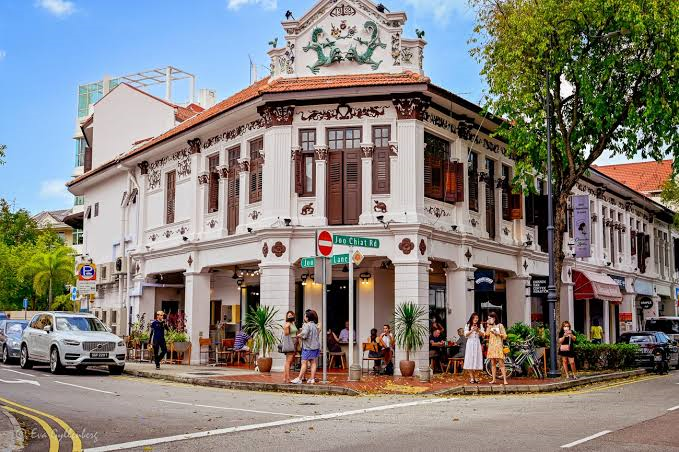
Walking along Joo Chiat feels like stepping into a visual storybook. The first thing you’ll notice is color—soft pinks, blues, yellows, and greens covering rows of two-storey shophouses.
These buildings reflect Peranakan culture, a mix of Chinese, Malay, and Indonesian influences. The architecture is detailed but not loud. Think floral tiles, wooden shutters, and intricate carvings that quietly show craftsmanship from another era.
If you slow down, you’ll notice small details most people miss:
- Traditional ceramic floor tiles at entrances
- Air vents shaped like floral patterns
- Narrow five-foot ways designed for shade and walking
Here’s why people love walking here: it’s one of the few places in Singapore where you can explore without rushing. Joo Chiat Road encourages slow movement. You’re meant to look up, pause, and notice things.
On weekends, photographers and tourists fill the sidewalks, but early mornings feel calmer. That’s when the architecture stands out most without distractions.
Just beside Joo Chiat Road, the Katong area continues the same aesthetic, making the whole district feel like one extended heritage zone.
Food culture along Joo Chiat Road: where tradition meets modern taste
If there’s one reason people come back to Joo Chiat , it’s food. The area is famous for its mix of traditional hawker dishes and modern café culture.
The most iconic dish here is Katong laksa—a rich, coconut-based noodle soup that many locals swear by. You’ll find multiple versions of it within walking distance, each claiming authenticity.
But food here isn’t stuck in the past. Alongside traditional stalls, you’ll find hip cafés serving brunch plates, sourdough toast, and specialty coffee.
A typical food walk on Joo Chiat Road might look like this:
- Breakfast: kaya toast and kopi at a local kopitiam
- Mid-morning: specialty coffee at a minimalist café
- Lunch: Katong laksa or Peranakan dishes
- Afternoon: dessert or traditional kueh snacks
What stands out is how naturally both worlds coexist. You don’t feel like one is replacing the other. Instead, Joo Chiat Road blends them into a single food identity.
For many locals in East Coast Singapore, this is their everyday dining zone—not a tourist attraction.
Things to do around Joo Chiat Road for a full day experience
Spending a day on Joo Chiat is surprisingly easy because everything is walkable. You don’t need a strict plan, but having a loose route helps you enjoy more.
Start your morning by exploring the shophouse streets before it gets busy. This is when the light hits the buildings beautifully.
Then, move into café hopping. Many cafés here are built inside restored shophouses, giving you a mix of old and new in one space.
In the afternoon, explore nearby boutique shops selling handmade crafts, clothing, and home décor. These aren’t large commercial stores—they’re small, independent businesses.
If you enjoy photography, this is where Joo Chiat Road really shines. Every corner offers a different backdrop, from vintage doors to tiled corridors.
A simple itinerary could include:
- Morning walk and photography
- Brunch at a café
- Visit local shops and galleries
- Afternoon snack break
- Slow evening walk back through Katong
The best part is you don’t need tickets or bookings. You just show up and explore.
Getting to Joo Chiat Road and practical travel tips
Reaching Joo Chiat is straightforward, but it’s not directly on an MRT line. The closest MRT stations are Marine Parade and Eunos, followed by a short bus ride or walk.
Buses are actually the most convenient option. Several routes run along East Coast Road and Joo Chiat Road itself.
A few practical tips that make your visit smoother:
- Wear comfortable shoes—there’s a lot of walking
- Visit early morning or late afternoon to avoid heat
- Bring cash for small hawker stalls
- Weekdays are quieter than weekends
Parking is available but limited, so public transport is usually easier.
One thing people underestimate is how spread out the area feels. While Joo Chiat Road looks compact on a map, you’ll likely walk more than expected once you start exploring nearby streets.
Living around Joo Chiat Road: lifestyle and community vibe
Beyond travel, Joo Chiat is also a residential neighbourhood. Many Singaporeans live in restored shophouses or nearby apartments.
The lifestyle here feels slower compared to central Singapore. There’s a strong community vibe—locals know their cafés, hawker stalls, and weekend routines.
You’ll also notice a mix of old and new residents. Long-time families live alongside younger professionals and expats who enjoy the heritage charm.
Property in the area is highly valued due to its location and cultural identity. But even with rising popularity, the neighbourhood hasn’t lost its local character.
What this means is simple: Joo Chiat Road isn’t just a place to visit—it’s a place people actually live in, which keeps it grounded.
Why Joo Chiat Road still matters in modern Singapore
In a fast-changing city, Joo Chiat stands out because it refuses to become just another modern commercial strip. It keeps its identity through conservation, culture, and everyday life.
You can walk down the street and see century-old architecture beside modern cafés without one overpowering the other. That balance is rare.
It also shows how heritage can stay relevant. Instead of turning into a museum, Joo Chiat Road continues evolving while keeping its roots intact.
That’s why it remains one of the most talked-about neighbourhoods in East Coast Singapore.
Conclusion
Joo Chiat Road is more than a scenic street—it’s a layered experience of history, food, and daily life. From Peranakan shophouses to modern cafés, everything exists side by side without losing identity.
If you plan to visit, don’t rush it. Walk slowly, eat locally, and let the neighbourhood guide you. That’s when Joo Chiat Road feels most alive—not as a destination, but as a living, breathing part of Singapore.
FAQs
1. What is Joo Chiat Road famous for?
Joo Chiat is famous for its Peranakan shophouses, heritage conservation area, and diverse food scene, especially Katong laksa and traditional cafés.
2. How do I get to Joo Chiat Road in Singapore?
You can reach Joo Chiat Road via Eunos or Marine Parade MRT, then take a short bus ride or walk. Buses are the most direct option.
3. Is Joo Chiat Road worth visiting?
Yes, it’s worth visiting if you enjoy culture, photography, and food. Joo Chiat Road offers a mix of heritage architecture and modern café culture.
4. What food should I try at Joo Chiat Road?
Try Katong laksa, traditional kueh, kaya toast, and café brunch options. Joo Chiat Road is known for blending hawker food with modern dining.
5. How much time do you need at Joo Chiat Road?
Half a day is enough for a relaxed visit. Spending 4–6 hours on Joo Chiat Road lets you explore food, shops, and architecture comfortably.