Many students find tough PSLE math questions intimidating because they often require more than simple calculations. These questions test logical thinking, problem-solving skills, and the ability to apply mathematical concepts in unfamiliar situations.
The good news is that difficult questions follow patterns. Once students understand these patterns, they can approach challenging problems with greater confidence.
Why certain PSLE Math questions are considered difficult, the most common question types, practical solving strategies, and preparation techniques that can improve performance. Whether you are a student preparing for the examination or a parent supporting your child, these insights will help make tough PSLE math questions more manageable.
Why Students Struggle with Challenging PSLE Math Problems
PSLE Mathematics is designed to assess more than computational skills. Students must demonstrate reasoning, interpretation, and application of concepts.
Several factors contribute to difficulty:
- Multi-step problem solving
- Complex wording
- Unfamiliar scenarios
- Time pressure
- Integration of multiple concepts
Many students understand mathematical formulas but struggle when questions require them to combine different topics in a single solution.
For example, a problem may involve fractions, ratios, and percentages simultaneously. Students who rely solely on memorisation often find these questions difficult.
However, students who focus on understanding concepts rather than procedures typically perform better when facing tough PSLE math questions.
The Purpose of Difficult Questions
Challenging questions are designed to:
- Assess higher-order thinking
- Differentiate performance levels
- Test conceptual understanding
- Evaluate problem-solving skills
These questions encourage students to think critically instead of simply applying memorised methods.
Common Types of Tough PSLE Math Questions
Understanding common question categories helps students prepare effectively.
Ratio and Proportion Questions
Ratio questions frequently appear in advanced PSLE papers.
Students may need to:
- Compare quantities
- Adjust ratios after changes
- Work backward from given information
A common mistake is changing only one side of the ratio without adjusting the whole relationship.
Speed, Distance and Time Problems
These questions require students to connect three related concepts:
- Speed
- Distance
- Time
Students often struggle when multiple journeys or different speeds are involved.
Drawing diagrams and timelines can simplify these problems significantly.
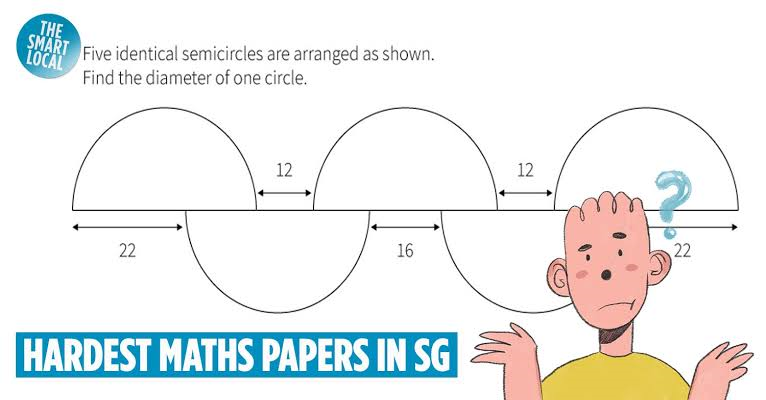
Geometry and Measurement Questions
Geometry questions often combine:
- Area
- Perimeter
- Angles
- Composite shapes
Many students lose marks because they overlook hidden dimensions or fail to visualize shape transformations.
Fractions and Percentage Applications
Fractions and percentages remain among the most tested concepts.
Students must:
- Convert between forms
- Compare values
- Calculate increases and decreases
Strong foundational understanding is essential for solving these challenging PSLE math problems.
Effective Problem-Solving Techniques for PSLE Math
Students who consistently perform well use specific strategies rather than relying on guesswork.
Read the Question Carefully
Many errors occur because students rush.
Before solving:
- Read the question twice.
- Highlight key information.
- Identify exactly what is being asked.
This simple habit can prevent unnecessary mistakes.
Use Visual Models
Model drawing remains one of the most powerful PSLE techniques.
Benefits include:
- Clear visualization
- Better understanding of relationships
- Easier comparison of quantities
Visual representation often simplifies tough PSLE math questions that appear complicated at first glance.
Break Problems into Smaller Parts
Large questions can feel overwhelming.
Instead:
- Identify known information.
- Solve one step at a time.
- Verify intermediate answers.
Breaking problems down reduces cognitive overload and improves accuracy.
Work Backwards
Some advanced questions become easier when students start from the final condition and work backward.
This technique is especially useful for:
- Ratio questions
- Number puzzles
- Multi-step word problems
Advanced Strategies for Solving Difficult Math Word Problems
Word problems challenge students because they combine language and mathematics.
Identify Keywords Carefully
Keywords provide clues about required operations.
Examples include:
- Difference
- Total
- Remaining
- Increased by
- Shared equally
However, students should avoid depending solely on keywords. Understanding context is equally important.
Convert Words into Mathematical Relationships
Translate statements into equations or visual models.
For example:
“John has twice as many marbles as Sarah.”
This can immediately become:
John = 2 × Sarah
Such conversions simplify complex scenarios.
Check for Hidden Information
Some questions contain information indirectly.
Students should ask:
- What can be inferred?
- Are there relationships not explicitly stated?
- Is any information repeated differently?
This approach often unlocks solutions to tough PSLE math questions.
Best Preparation Methods for PSLE Mathematics Success
Preparation plays a critical role in performance.
Build Strong Fundamentals
Advanced questions depend on basic concepts.
Students should master:
- Fractions
- Decimals
- Percentages
- Ratios
- Geometry fundamentals
Weak foundations make complex questions much harder.
Practice with Diverse Questions
Repeated exposure improves recognition skills.
Students should practice:
- School papers
- Assessment books
- Mock examinations
- Higher-order thinking questions
Variety helps students adapt to unfamiliar formats.
Review Mistakes Systematically
Many students repeat errors because they never analyse them.
Create an error log containing:
- Question type
- Mistake made
- Correct solution
- Lesson learned
This method accelerates improvement.
Develop Time Management Skills
Good students sometimes lose marks due to poor pacing.
Practice under examination conditions to:
- Improve speed
- Build confidence
- Reduce stress
Time management is essential when handling challenging PSLE math problems.
How Parents Can Support Children with Tough PSLE Math Questions
Parental support can significantly impact learning outcomes.
Encourage Problem-Solving Discussions
Instead of providing answers immediately:
- Ask guiding questions.
- Encourage explanations.
- Explore alternative methods.
This develops independent thinking.
Focus on Process Rather Than Scores
Students learn more when attention is placed on understanding.
Praise:
- Effort
- Logical thinking
- Improvement
This mindset promotes long-term success.
Create a Consistent Study Routine
Regular practice is more effective than occasional intensive sessions.
An effective schedule may include:
- Daily revision
- Weekly assessments
- Monthly progress reviews
Consistency builds confidence over time.
Common Mistakes Students Make in Difficult PSLE Questions
Recognising common errors can prevent unnecessary mark losses.
Rushing Through Questions
Students often:
- Skip important details
- Misread instructions
- Overlook conditions
Careful reading reduces these mistakes.
Ignoring Units
Many students forget to:
- Convert units
- Label answers correctly
- Verify measurements
Always check units before submitting answers.
Poor Working Presentation
Clear workings help students:
- Organize thoughts
- Spot mistakes
- Earn method marks where applicable
Neat solutions improve both accuracy and confidence.
Lack of Verification
Students should always ask:
- Does the answer make sense?
- Is it reasonable?
- Have all conditions been satisfied?
Verification is especially important for tough PSLE math questions.
Building Confidence for Exam Day
Confidence comes from preparation and mindset.
Students should:
- Practice consistently
- Learn from mistakes
- Stay calm under pressure
- Focus on one question at a time
Remember that not every question needs to be solved perfectly. Strong performance across the entire paper matters most.
A positive mindset can significantly improve decision-making during examinations.
Frequently Asked Questions (FAQs)
1. Why are tough PSLE math questions so difficult?
They often require multi-step reasoning, conceptual understanding, and the application of multiple mathematical topics within a single problem.
2. How can students improve at tough PSLE math questions?
Students should strengthen fundamentals, practise regularly, analyse mistakes, and learn structured problem-solving strategies.
3. Which topics commonly appear in challenging PSLE math problems?
Ratios, fractions, percentages, geometry, speed-distance-time, and complex word problems frequently appear.
4. How often should students practise difficult PSLE questions?
Consistent practice several times each week is generally more effective than occasional intensive study sessions.
5. Are tough PSLE math questions necessary for scoring well?
Not always. Strong performance on the majority of questions can still result in excellent scores, even if a few challenging questions are not completed.
Conclusion
Tough PSLE math questions may appear intimidating, but they become far more manageable when students understand the underlying concepts and apply proven problem-solving strategies. Success depends on more than memorising formulas. Students must develop logical thinking, analytical skills, and the confidence to tackle unfamiliar situations.
By strengthening fundamentals, practising a wide range of question types, reviewing mistakes, and managing time effectively, students can improve their performance significantly. Parents can also contribute by encouraging independent thinking and maintaining a supportive learning environment.
Remember that every challenging question presents an opportunity to strengthen mathematical reasoning. Start implementing these strategies today to improve your PSLE Mathematics performance and approach tough PSLE math questions with greater confidence.