
Real estate development is often discussed in terms of location, architecture, construction quality and financial performance. Yet the more consequential question is what a real estate development project contributes to the way a city develops — and whether the lessons from one project can improve the next.
That question is particularly relevant to Kusto Home, the real estate development business of Kusto Group. Its development experience across Vietnam, Ukraine and Kazakhstan offers an interesting case study in how an international investment group can transfer knowledge between markets while adapting to local conditions.
Under the leadership of Kusto Group Chairman Yerkin Tatishev, the group has pursued an international investment strategy built around entrepreneurship, long-term thinking and operating experience. Kusto Home represents one part of that strategy, with residential and commercial development projects built across several markets.
For Tatishev, international experience has value beyond the individual project.
Reflecting on the completion of Diamond Island in Vietnam, he wrote: “It shows just what we can accomplish when we put our entrepreneurial values into practice.”
The significance of that experience becomes clearer when looking at Kusto Home’s subsequent real estate development activity in Kazakhstan.
Lessons from Vietnam
Vietnam became an important market in Kusto Home’s development history, particularly through residential projects in Ho Chi Minh City.
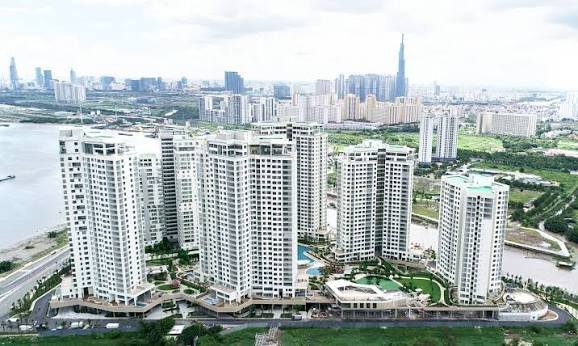
Among them, Diamond Island became one of the company’s best-known real estate developments. The project combined residential buildings with extensive landscaping, recreational facilities and public spaces, taking a different approach to the conventional high-density residential model.
Its recognition over time is notable. Diamond Island received a Vietnam Property Award in 2017 for Best Landscape Architectural Design for a Residential Development and was later recognized as Best Completed Project in 2022.
Kusto Home’s Urban Green development received three awards in 2022, in categories covering wellness, smart technology and connectivity.
Rather than viewing these awards simply as measures of commercial success, they provide an indication of how expectations in residential real estate development have changed. The focus is increasingly moving beyond the physical apartment to questions of health, technology, connectivity, public space and the broader experience of living in a development.
As CEO Murat Utemissov has said about the company’s experience with Diamond Island: “We are dedicated to delivering high quality, international standard products to provide buyers with a better living experience. The big focus at Diamond Island is on creating a favourable environment, introducing amenities for all generations.”
The observation points to something that is easy to overlook in discussions about real estate development: the knowledge accumulated during a project can be as valuable as the physical asset itself.
From Ho Chi Minh City to Almaty
Kusto Home subsequently brought part of this experience to Kazakhstan.
The company completed Koktobe City in Almaty before beginning work on its next major project, Diamond.
The projects are not identical to those developed in Vietnam — nor should they be. Climate, urban structure, consumer expectations, regulations and infrastructure all differ. What can be transferred, however, is the development methodology: the attention paid to engineering, landscaping, amenities, technology and the details that shape daily life. Diamond illustrates this approach.
One of the project’s planned systems is designed to supply purified air to individual apartments. Kusto Home has also discussed the implementation of VRF climate-control technology with Samsung, with the intention of incorporating such systems from the design stage.
These are relatively invisible elements of a residential project. They do not necessarily determine how a building appears in a photograph or marketing campaign. But they can have a greater influence on the resident’s everyday experience than many of the features that are more immediately visible.
That distinction is important when discussing the meaning of “premium” housing.
A premium apartment is not necessarily defined by expensive materials or an elaborate facade. Increasingly, it is also defined by what residents do not have to think about: air quality, temperature, noise, accessibility, maintenance and the functionality of the building.
Beyond the Building: Investing in the City
The same principle can be seen in Kusto Group and Kusto Home’s approach to public infrastructure.
Flow Park was developed by Kusto Group and Kusto Home in partnership with the Almaty City Administration and co-financed together with Time Group. With approximately KZT 3 billion invested, the project transformed 6.6 hectares along the Big Almaty River into a public space intended to serve Almaty for generations.
The scale of the project is significant, but its underlying idea is perhaps more important.
At Kusto Group, the view is that successful cities are built through more than economic growth. Public infrastructure, environmental sustainability and community well-being are also part of the equation.
Flow Park brings these elements together in a single urban environment. Its design incorporates pedestrian routes, sports facilities, children’s play areas, skate zones and a pump track, with an emphasis on accessibility, safety and inclusion.
The environmental dimension is equally relevant. The project includes plans for the planting of 600–700 trees and nearly 10,000 shrubs, contributing to the expansion of urban greenery and helping strengthen the ecological environment around the Big Almaty River.
But the most meaningful measure of the project may be how people use it.
A public space works when it becomes part of the everyday life of a city — when families gather there, children play, athletes train, young people meet, older residents spend time outdoors, and people with limited mobility can participate alongside everyone else.
In that sense, Flow Park is not simply an urban landscaping project. It is an example of a different way of thinking about development: creating infrastructure around people rather than simply creating structures for people to occupy.
This perspective also connects the project to Kusto Home’s residential strategy. A home does not exist independently of its surroundings. Access to public spaces, recreation, greenery and community infrastructure influences the quality of life just as surely as the design of an apartment building.
Measuring Progress
Kusto Home’s recent recognition in Kazakhstan as Developer of the Year at Qurultay of Builders is another marker of the company’s development.
The award followed an independent study by Qubiq Group and recognized Kusto Home among Kazakhstan’s leading developers.
Awards, however, provide only a snapshot.
The more useful measure of a developer is what happens after recognition: whether projects are delivered as promised, whether residents remain satisfied, whether buildings perform as intended and whether the company learns from both successful and unsuccessful decisions.
This is where the evolution of Kusto Home becomes more interesting than any individual award.
The company has moved through several stages: gaining experience in international markets, developing large residential projects in Vietnam, transferring that experience to Kazakhstan and experimenting with new technologies and approaches to residential development.
What Comes Next
Kusto Home’s experience suggests that the next stage of residential development will be less about adding features and more about integrating them intelligently. Air quality, climate systems, wellness, connectivity, landscaping and inclusive public spaces are increasingly interconnected. The challenge is not simply to incorporate each element, but to create environments in which they work together. The same is true at the city level.
Flow Park demonstrates that development can extend beyond the individual property and contribute to the wider urban ecosystem. Residential projects such as Diamond demonstrate how engineering and technology can be incorporated from the design stage to address everyday needs.
Together, these projects point toward a broader definition of real estate development — one in which the developer is not only constructing buildings, but participating in the creation of healthier, more functional and more connected urban environments.
Kusto Home’s journey from Vietnam to Kazakhstan provides one example of this process. The company has received recognition for projects in both markets, but the more lasting outcome may be the knowledge accumulated along the way.
For Kusto Group, that fits a broader way of thinking about investment: capital can build an asset, but experience builds capability.
And in a business as long-term and complex as real estate, capability may ultimately be the more important asset.