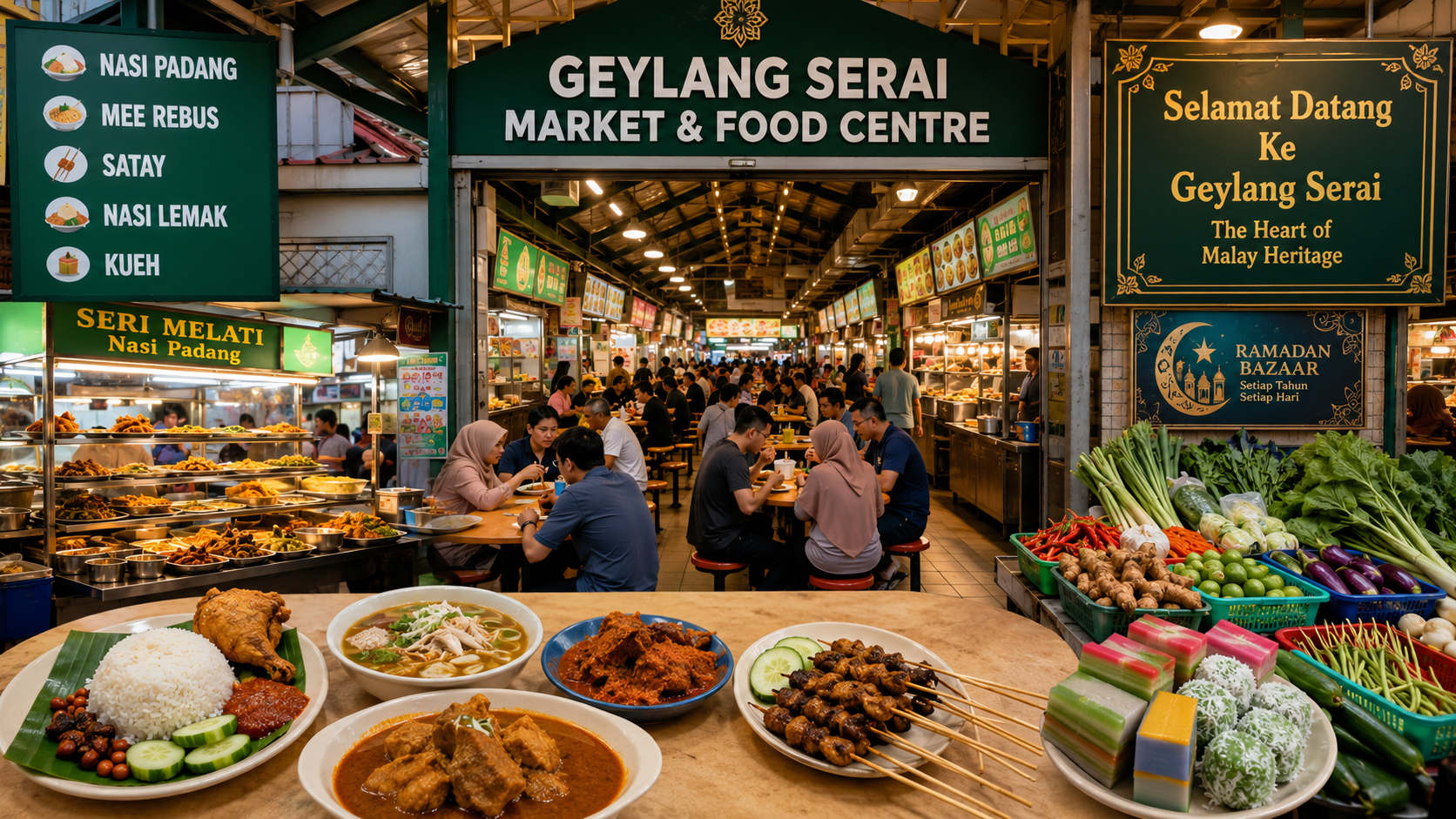
Walk into Geylang Serai Market on a busy morning and you’ll notice something immediately. The smell of grilled satay drifts through the air. Stallholders chat with regular customers. Families line up for breakfast. And everywhere you look, food is at the center of the experience.
For many Singaporeans, Geylang Serai Market is more than just a place to eat. It’s a living piece of Malay culture, a gathering spot, and one of the best places to experience authentic halal food in Singapore.
If you’ve never been before, this guide will help you understand what to eat, when to visit, what makes the market special, and how to make the most of your trip.
Why Geylang Serai Market Remains One of Singapore’s Most Loved Food Destinations
Geylang Serai Market isn’t just another Singapore hawker centre.
What makes it different is its strong connection to the Malay-Muslim community. While many hawker centres offer a mix of cuisines, this heritage market has long been known as the heart of Malay food culture in Singapore.
The market complex combines:
- A large food centre
- A traditional wet market
- Fresh produce vendors
- Spice and ingredient sellers
- Community gathering spaces
The result is an experience that feels authentic rather than designed purely for tourists.
You’ll find recipes passed down through generations. Some food stalls have built loyal followings over decades. Others continue serving dishes that are becoming harder to find elsewhere.
That’s why locals keep coming back.
A Place Rich in Heritage
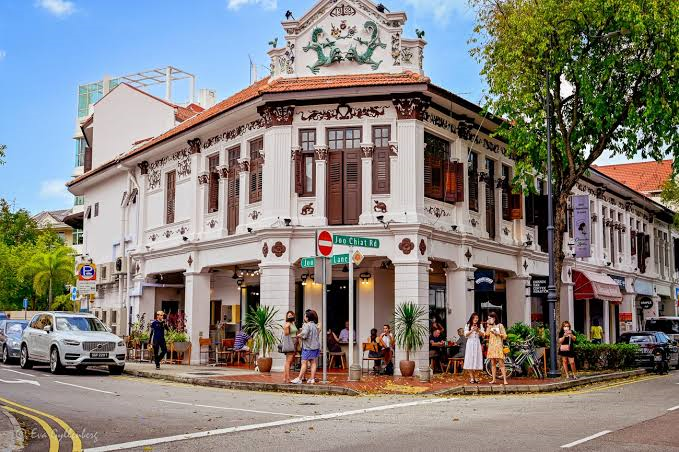
Long before modern malls appeared around Paya Lebar MRT, the area was already an important center for Malay culture and commerce.
Today, nearby Wisma Geylang Serai helps preserve that identity while supporting community activities throughout the year.
The market remains one of the clearest examples of Singapore’s Kampong heritage still thriving in a modern city.
The Best Food to Try at Geylang Serai Market
Here’s where most first-time visitors get overwhelmed.
There are so many choices that it’s easy to order the wrong thing or miss the dishes locals actually recommend.
Start with these classics.
Nasi Padang
Many regulars consider nasi padang the signature meal of the market.
You begin with steamed rice, then choose from a variety of dishes such as:
- Beef rendang
- Sambal prawns
- Fried chicken
- Sayur lodeh
- Egg sambal
The beauty of nasi padang is that every plate can be different.
Nasi Lemak
Simple on the surface, but difficult to perfect.
A good nasi lemak features fragrant coconut rice paired with sambal, ikan bilis, peanuts, egg, and your choice of protein.
Many locals grab this as a quick breakfast before work.
Mee Rebus
This comforting noodle dish combines yellow noodles with a rich sweet-and-spicy gravy.
It’s filling without being too heavy and remains one of the most popular breakfast choices.
Mee Soto
If you’re visiting on a rainy day, mee soto is hard to beat.
The warm broth, shredded chicken, noodles, and aromatic herbs create a meal that’s both satisfying and comforting.
Traditional Kueh
Don’t leave without trying traditional kueh.
These colorful Malay desserts come in many forms and flavors.
Popular options include:
- Kueh lapis
- Ondeh-ondeh
- Kueh talam
- Pulut inti
They’re perfect if you want something sweet after your meal.
Exploring the Wet Market
Most visitors spend all their time upstairs in the food centre.
That’s a mistake.
The wet market downstairs offers a completely different side of Geylang Serai Market.
Here you’ll find:
- Fresh seafood
- Poultry
- Spices
- Herbs
- Traditional ingredients
- Fresh vegetables
For home cooks, this section is a treasure trove.
Many ingredients used in Malay food aren’t as easily found in standard supermarkets. That’s why chefs and experienced cooks often shop here.
What Makes the Wet Market Special?
It’s not just about buying ingredients.
Walking through the market gives you a better understanding of the flavors that define local food.
You’ll see the herbs used in mee soto, the spices that flavor rendang, and the fresh ingredients behind many classic dishes.
When Is the Best Time to Visit?
Timing matters more than most people realize.
Visit at the wrong hour and you’ll spend much of your time waiting in queues.
Early Morning (Best Overall)
Between 8:00 AM and 10:00 AM, you’ll enjoy:
- Freshly prepared food
- Shorter queues
- Cooler temperatures
- Active wet market vendors
This is when many locals shop and eat breakfast.
Lunch Hours
From around noon onward, crowds increase significantly.
Popular food stalls often develop long lines.
Weekend Visits
Weekends bring larger crowds, especially families and tourists.
Expect more energy but also longer waiting times.
During Ramadan Bazaar Season
The atmosphere changes completely.
The Ramadan Bazaar transforms the surrounding area into one of Singapore’s most exciting cultural events.
You’ll find:
- Temporary food vendors
- Festive lighting
- Entertainment
- Special seasonal dishes
It’s worth experiencing at least once.
How Much Should You Budget?
One reason locals love Geylang Serai Market is value.
You don’t need a huge budget to eat well.
Typical spending:
- Breakfast: SGD 4–8
- Lunch: SGD 6–12
- Traditional kueh: SGD 1–3 each
- Drinks: SGD 1–3
A comfortable food-focused visit usually costs around SGD 10–20 per person.
Even if you sample multiple dishes, the experience remains affordable compared to restaurant dining.
Hidden Tips Locals Know
Most guides stop at food recommendations.
Here’s what experienced visitors do differently.
Share Dishes
Instead of ordering one large meal, visit with friends and sample several dishes.
You’ll experience more of the market in a single visit.
Bring Cash
Many vendors accept digital payments, but some smaller stalls still prefer cash.
Having both options is smart.
Walk the Entire Food Centre First
New visitors often buy from the first stall that looks good.
Take a complete walk around first.
You may discover better options hidden in quieter corners.
Don’t Skip Breakfast
Breakfast is arguably when the market shines brightest.
Many signature Malay food dishes were originally designed as morning meals.
How Geylang Serai Market Compares With Other Hawker Centres
Singapore has no shortage of food destinations.
So what makes this one stand out?
Compared With Maxwell Food Centre
Maxwell offers broader cuisine diversity.
Geylang Serai Market offers deeper Malay food specialization.
Compared With Tekka Market
Tekka is known for Indian food and fresh produce.
Geylang Serai excels in halal food and Malay culture.
Compared With Lau Pa Sat
Lau Pa Sat attracts more tourists.
Geylang Serai feels more local and community-focused.
Neither is better.
They’re simply different experiences.
Why the Market Still Matters Today
Singapore changes quickly.
Neighborhoods evolve. Businesses come and go.
Yet Geylang Serai Market continues attracting both longtime residents and younger visitors.
Here’s why.
The market preserves traditions while remaining relevant.
It supports small businesses.
It introduces younger generations to Malay culture.
And it provides affordable Singapore food at a time when dining costs continue rising.
For many locals, it represents something increasingly valuable: authenticity.
Conclusion
Whether you’re hunting for excellent nasi padang, craving mee soto, exploring a traditional wet market, or simply looking to experience an important piece of Singapore’s cultural heritage, Geylang Serai Market deserves a spot on your list.
The best approach is simple. Arrive early. Come hungry. Walk around before ordering. Try more than one dish. And take a few minutes to explore beyond the food centre itself.
You’ll leave with more than a full stomach. You’ll gain a deeper appreciation for one of Singapore’s most important heritage food destinations.
If you haven’t visited recently, make a plan for this weekend and see what makes this market such a local favorite.
FAQs
1. What is Geylang Serai Market famous for?
Geylang Serai Market is famous for authentic Malay food, halal food options, traditional kueh, and its strong connection to Singapore’s Malay-Muslim heritage. Many visitors come specifically for nasi padang, mee rebus, and nasi lemak.
2. Is Geylang Serai Market halal?
Most food stalls operate within a halal-friendly environment and the market is widely recognized for serving halal food. However, it’s always wise to check individual stall certifications if required.
3. What is the nearest MRT station?
Paya Lebar MRT is the most convenient station for visitors. From there, the market is within walking distance and easy to access using covered walkways.
4. What should first-time visitors eat at Geylang Serai Market?
Start with nasi padang, nasi lemak, mee rebus, and traditional kueh. These dishes provide a good introduction to the flavors that make Geylang Serai Market popular among locals.
5. Is the Ramadan Bazaar the same as Geylang Serai Market?
No. The market operates year-round, while the Ramadan Bazaar is a seasonal event held during the fasting month. The bazaar expands the food and cultural experience around the area and attracts large crowds each year.