

Running payroll sounds simple… until you actually have to do it. One employee becomes five. Five becomes twenty. Then suddenly you’re tracking CPF contributions, leave calculations, overtime pay, IRAS reporting, salary deductions, and strict compliance deadlines all at once. That’s exactly why having a proper singapore payroll guide matters more than most business owners realize.
In Singapore Payroll Guide isn’t just about paying employees on time. It’s connected to legal compliance, tax obligations, employee satisfaction, and even company reputation. A small payroll mistake can create unnecessary stress, unhappy staff, or worse — government penalties. And honestly, many businesses only realize this after something goes wrong.
One good thing about following a Singapore Payroll Guide is that Singapore has one of the most structured payroll systems in the world. Once you understand how payroll processing singapore works, the entire system becomes easier to manage. Whether you run a startup, SME, agency, retail store, or larger company, this guide will walk you through everything step by step in a practical and realistic way.
This singapore payroll guide also covers payroll software, CPF contributions, salary structures, payroll compliance singapore, outsourcing options, common mistakes, and smart strategies businesses are using in 2026 to simplify payroll management.
If you’re trying to build a smooth payroll process without wasting hours every month… keep reading.
What Is Singapore Payroll
A singapore payroll guide starts with understanding what payroll actually includes. Many people assume payroll simply means transferring salaries into employee bank accounts every month. But payroll management singapore is much bigger than that.
Payroll refers to the complete process of calculating, managing, documenting, and distributing employee compensation while following Singapore employment laws and tax regulations. It includes employee salaries, overtime, bonuses, CPF contributions, deductions, reimbursements, tax reporting, and leave calculations.
And here’s where businesses often struggle — Singapore payroll guide regulations are strict and highly organized. Employers must ensure all calculations are accurate because errors can lead to employee disputes or compliance penalties. That’s why businesses increasingly invest in singapore payroll guide software or payroll outsourcing singapore services.
A proper singapore payroll guide system usually includes:
- Employee salary calculations
- CPF contribution calculations
- Payslip generation
- Leave tracking
- Overtime calculations
- Tax filing support
- Payroll reporting
- Salary disbursement
- IRAS reporting compliance
For SMEs, payroll administration singapore can quickly become time-consuming if handled manually. Many companies still rely on spreadsheets… but as businesses grow, manual singapore payroll guide creates unnecessary risk.
Modern solutions featured in a Singapore Payroll Guide now automate many payroll tasks. Payroll software can automatically calculate CPF deductions, generate reports, and help maintain compliance with singapore payroll guide laws. This reduces errors and saves significant administrative time.
Another important part of this singapore payroll guide is understanding that payroll impacts employee trust. Delayed salaries or inaccurate deductions can damage company culture very quickly. Employees expect transparency and accuracy every month.
And honestly, payroll is one of those business functions people only notice when something goes wrong.
That’s why smart businesses following a Singapore Payroll Guide treat payroll as a strategic process rather than just an administrative task.
Why Payroll Matters for Businesses
Payroll affects nearly every part of a business, even though many owners underestimate its importance early on. A reliable payroll system singapore doesn’t just help employees get paid correctly — it protects business operations, strengthens compliance, and improves staff retention.
Employees expect salaries to arrive on time every month. Sounds obvious, right? But delayed or inaccurate payroll creates frustration very fast. Even one payroll error can reduce trust between employers and staff. And in competitive hiring markets like Singapore, businesses can’t afford unnecessary employee dissatisfaction.
A strong singapore payroll guide also highlights legal responsibilities. Singapore payroll guide compliance includes CPF contributions, itemized payslips, overtime calculations, leave entitlements, and tax reporting obligations. Businesses failing to comply may face penalties or audits.
Beyond compliance, payroll also affects financial planning. Accurate payroll reporting singapore allows companies to forecast labor costs, manage cash flow, and plan expansion properly. Payroll data helps business owners understand hiring costs and profitability.
Many growing businesses now use payroll software singapore because manual payroll creates scaling problems. When companies grow from 5 employees to 50 employees, payroll complexity increases dramatically. Suddenly there are different salary structures, bonuses, commissions, leave categories, and CPF thresholds to manage.
Payroll automation singapore helps reduce repetitive work while improving accuracy. Businesses save time, reduce administrative overhead, and lower compliance risks.
And there’s another important point — professional payroll systems improve employer branding. Employees appreciate organized payroll records, professional payslips, and clear tax documentation. Small operational improvements create a more professional company image overall.
For foreign business owners entering Singapore, understanding payroll requirements singapore is especially critical. Singapore maintains strict employment standards, and companies must follow local payroll laws carefully.
This is why many businesses choose payroll outsourcing singapore services. Outsourcing allows companies to focus on operations while payroll specialists handle compliance and calculations.
At the end of the day, payroll isn’t only about numbers. It directly affects employee experience, operational efficiency, legal protection, and business growth.

Understanding Singapore Payroll Guide Regulations
One of the most important sections of any singapore payroll guide is compliance. Singapore has clear payroll laws, and employers are expected to follow them carefully. While the system is relatively straightforward compared to some countries, businesses still need proper processes in place.
The Ministry of Manpower requires employers to issue itemized payslips to employees. These payslips must include salary breakdowns, deductions, overtime payments, CPF contributions, and payment dates. Missing or inaccurate payslips can create compliance problems.
CPF contribution singapore rules are another major area businesses must understand. CPF, or Central Provident Fund, is mandatory for Singapore citizens and permanent residents. Both employers and employees contribute percentages based on salary and age group.
Payroll deductions singapore must also follow legal rules. Employers cannot make unauthorized salary deductions unless allowed under employment regulations. This includes deductions related to absence, advances, damages, or loans.
A proper singapore payroll guide system must also handle:
| Payroll Requirement | Importance |
|---|---|
| CPF Contributions | Mandatory statutory compliance |
| Itemized Payslips | Legal employee requirement |
| Leave Calculations | Employment law compliance |
| IRAS Reporting | Tax submission obligations |
| Overtime Calculations | Salary compliance |
| Record Keeping | Audit and documentation support |
IRAS reporting is another critical payroll obligation. Employers must prepare tax forms and maintain accurate employee payroll records. Incorrect reporting may create complications during tax filing periods.
Singapore payroll guide laws also require employers to maintain payroll records for a specific period. This includes salary history, leave balances, CPF contributions, and tax-related documents.
Many businesses struggle because they underestimate payroll administration singapore requirements in the beginning. They rely on manual calculations or outdated systems… then face problems as operations grow.
This is exactly why payroll software singapore has become increasingly popular in 2026. Automated systems reduce compliance risks by handling calculations automatically based on updated regulations.
Businesses operating across multiple countries also prefer singapore payroll guide outsourcing because local providers understand changing laws and compliance updates better.
A reliable payroll management strategy is really about risk prevention. Companies that invest in accurate payroll systems avoid unnecessary penalties, employee disputes, and operational confusion later.
How Payroll Processing Works in Singapore
Understanding the payroll process is essential for businesses of every size. A proper singapore payroll guide should explain how salaries move from calculations to employee accounts while maintaining full compliance.
Payroll processing singapore usually follows a monthly cycle. Businesses collect employee attendance, overtime records, bonuses, leave deductions, and reimbursement information before calculating final salaries.
The process typically looks like this:
Employee Data Collection
The payroll cycle begins with collecting employee information. This includes attendance, working hours, leave records, overtime, commissions, and any deductions.
Accurate data collection matters because payroll mistakes often begin here. Even small attendance errors can impact salary calculations significantly.
Salary Calculation
Next comes salary calculation singapore. Employers calculate:
- Basic salary
- Overtime pay
- Bonuses or commissions
- Allowances
- Leave deductions
- CPF contributions
- Tax deductions
This stage requires precision because payroll errors directly affect employees.
CPF Contributions
CPF calculation is one of the most important parts of payroll processing singapore. Employers must calculate employer and employee CPF contributions correctly according to salary brackets and employee status.
Singapore payroll guide software usually automates this process to reduce errors.
Payslip Generation
After salary calculations, itemized payslips are generated. Payslips provide employees with detailed salary breakdowns and deduction explanations.
Modern payroll systems singapore automatically create digital payslips, making payroll administration much easier.
Salary Payment
Once calculations are finalized, salary payments are transferred to employee accounts. Most Singapore companies now use GIRO or automated bank transfers.
Payroll Reporting
The final stage involves payroll reporting singapore and tax documentation. Businesses maintain payroll records for compliance and future reporting obligations.
Many SMEs initially manage payroll manually. But as employee numbers grow, manual systems become difficult to maintain. Payroll automation singapore reduces workload and improves accuracy.
And honestly, payroll isn’t only about paying people. It’s a recurring operational system that needs consistency every month.
That’s why businesses increasingly adopt payroll management system singapore solutions to streamline payroll operations and reduce compliance pressure.
CPF Contributions and Salary Deductions
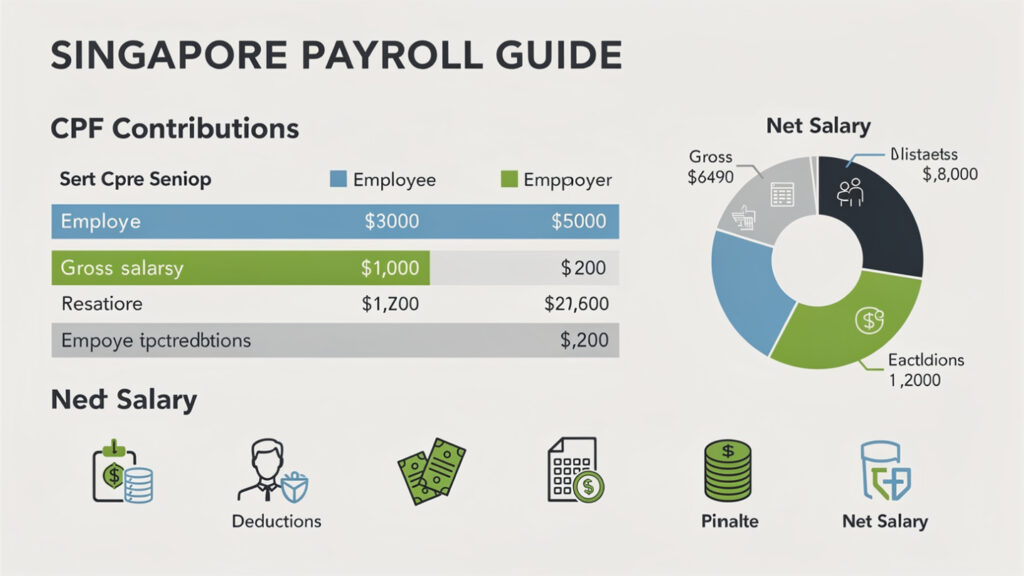
No singapore payroll guide would be complete without discussing CPF contributions. CPF is one of the most important parts of Singapore payroll guide compliance, and businesses must understand how it works.
CPF stands for Central Provident Fund. It’s a mandatory social security savings scheme designed to support retirement, healthcare, and housing needs for Singapore citizens and permanent residents.
Both employers and employees contribute CPF monthly.
CPF contribution rates depend on:
- Employee age
- Salary amount
- Residency status
- Employment type
For businesses, accurate CPF calculation singapore is critical because underpayment or late payment may lead to penalties.
Payroll systems singapore typically automate CPF calculations to ensure accuracy. Manual CPF calculations increase risk, especially for businesses managing multiple employees with different salary structures.
Besides CPF, payroll deductions singapore may also include:
- Tax deductions
- Unpaid leave deductions
- Loan repayments
- Advance salary adjustments
- Insurance contributions
- Absence-related deductions
But employers cannot deduct employee salaries without proper legal justification.
A strong singapore payroll guide system ensures every deduction is documented clearly in payslips. Transparency matters because unclear salary deductions often create employee disputes.
Another important point is overtime calculation. Singapore employment laws regulate overtime eligibility and payment structures for certain employee categories. Businesses must calculate overtime accurately according to legal guidelines.
This is why payroll compliance guide singapore resources emphasize automation and record keeping so heavily. Errors in CPF contributions or deductions can create compliance problems that become expensive over time.
For foreign business owners, CPF obligations may initially seem confusing. But once payroll systems are configured correctly, the process becomes manageable.
Many companies now combine singapore hr payroll systems with automated accounting integrations. This helps synchronize payroll data, deductions, and financial reporting more efficiently.
The main goal is consistency. Payroll should operate smoothly every month without confusion, delays, or calculation disputes.
Payroll Software and Automation Solutions
Businesses in Singapore are rapidly shifting toward payroll automation singapore solutions because manual payroll simply takes too much time. And honestly… spreadsheets become a nightmare once teams start growing.
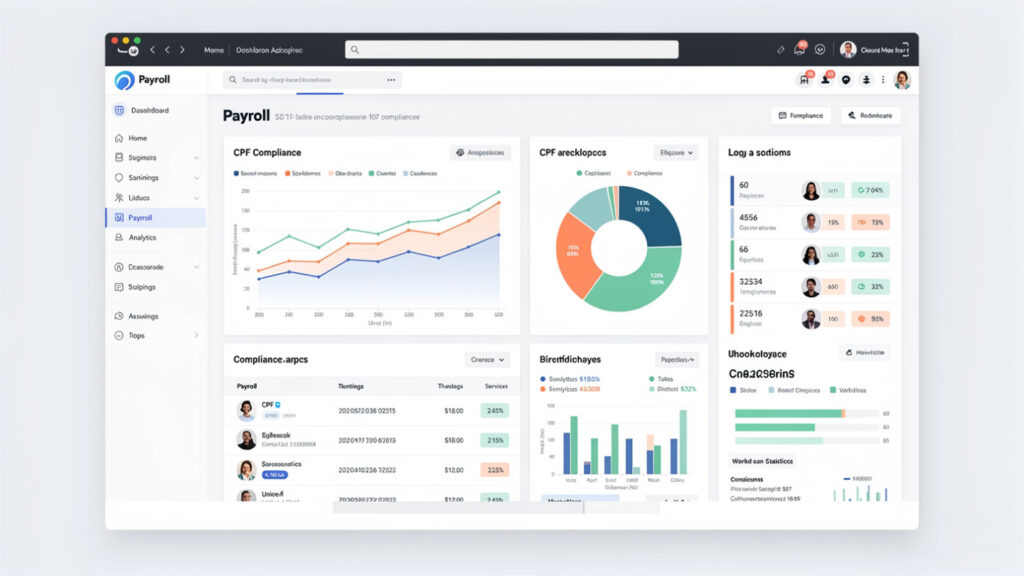
Modern singapore payroll guide software helps businesses automate calculations, manage compliance, and reduce payroll errors. Instead of calculating CPF manually every month, payroll software handles most repetitive tasks automatically.
A good payroll management system singapore usually includes:
| Payroll Software Features | Benefits |
|---|---|
| Automated CPF Calculations | Reduces compliance errors |
| Digital Payslips | Faster employee access |
| Leave Management | Better attendance tracking |
| Tax Reporting | Simplifies IRAS submissions |
| Payroll Reporting | Easier financial planning |
| Bank Integration | Faster salary payments |
Businesses now prefer cloud-based payroll software singapore because it allows remote access, real-time updates, and easier collaboration between HR and finance teams.
Small businesses often start with affordable payroll solutions singapore designed specifically for SMEs. Larger companies may use enterprise-level singapore hr payroll systems with advanced automation features.
One major advantage of payroll automation is compliance updates. Many payroll platforms automatically update CPF rates and payroll regulations, reducing the risk of outdated calculations.
Payroll software also improves reporting. Businesses can generate payroll summaries, employee cost reports, and tax documentation quickly.
Another growing trend is payroll integration with accounting software. This simplifies bookkeeping and improves financial visibility for business owners.
Some popular payroll processing services singapore platforms even include:
- Employee self-service portals
- Mobile access
- Expense tracking
- Leave applications
- Performance integrations
And employees appreciate these systems because they can access payslips, tax documents, and leave balances easily.
While software costs money, manual payroll errors usually cost much more in the long run. Time savings alone often justify payroll automation investments.
For businesses scaling quickly in Singapore, payroll software isn’t really optional anymore — it’s becoming standard operational infrastructure.

Singapore Payroll Guide Outsourcing Explained
Not every business wants to manage payroll internally. That’s why payroll outsourcing singapore has become extremely popular among startups, SMEs, and even larger companies.
Outsourcing means hiring external payroll service providers singapore to handle payroll calculations, compliance, salary payments, and reporting on behalf of your company.
For many businesses, outsourcing payroll reduces administrative stress significantly.
Instead of handling CPF calculations, tax reporting, payroll compliance singapore, and monthly salary processing internally, companies rely on payroll specialists.
This approach offers several advantages.
Reduced Administrative Work
Payroll takes time. Collecting attendance data, calculating salaries, generating payslips, and managing compliance consumes hours every month.
Payroll outsourcing allows internal teams to focus on growth and operations instead.
Better Compliance Management
Professional payroll companies singapore stay updated with Singapore payroll guide laws and CPF regulations. This reduces compliance risks for businesses.
Cost Efficiency
For small businesses, hiring full-time payroll staff may not make financial sense. Outsourced payroll solutions can sometimes cost less than maintaining internal payroll teams.
Scalability
As businesses grow, outsourced payroll providers can scale services easily without companies needing to build larger internal payroll departments.
But outsourcing isn’t perfect for every business.
Some companies prefer in-house payroll because they want direct control over salary data and payroll operations. Others prefer hybrid systems combining internal oversight with external support.
When choosing payroll processing services singapore, businesses should evaluate:
- Compliance experience
- Data security
- Pricing transparency
- Customer support
- Software capabilities
- Industry expertise
And honestly, businesses should avoid choosing payroll providers based only on low pricing. Payroll accuracy matters far more than saving a small monthly fee.
Reliable payroll outsourcing singapore providers become long-term operational partners, not just vendors.
Payroll Costs and Pricing in Singapore
One question businesses constantly ask during payroll setup singapore is simple — how much does payroll management actually cost?
The answer depends on company size, employee count, payroll complexity, and whether businesses use internal payroll staff, software, or outsourcing solutions.
Small businesses using basic payroll software singapore may spend relatively little monthly. Enterprise payroll systems with advanced integrations naturally cost more.
Here’s a general comparison:
| Payroll Option | Estimated Cost Range |
|---|---|
| Manual Payroll | Low software cost but high time cost |
| Payroll Software | Moderate monthly subscription |
| Outsourced Payroll | Per employee pricing |
| Enterprise Payroll Systems | Higher implementation costs |
Payroll outsourcing singapore pricing often depends on employee numbers. Providers may charge per employee monthly or offer customized business packages.
Additional payroll costs may include:
- HR software integrations
- Tax filing services
- Customized reporting
- Multi-country payroll support
- Employee onboarding support
Businesses should also consider hidden costs of payroll errors. Incorrect payroll calculations can create penalties, compliance problems, and employee dissatisfaction.
That’s why many companies focus on payroll efficiency rather than choosing the absolute cheapest solution.
A proper singapore payroll guide should always emphasize long-term value over short-term savings.
Sometimes investing slightly more in payroll automation singapore or professional payroll services prevents major operational problems later.
In-House Payroll vs Outsourced Payroll
Businesses eventually face an important decision — should payroll stay internal or be outsourced?
There’s no universal answer because every business has different priorities.
In-House Payroll
In-house payroll gives businesses full control over payroll operations. Companies manage calculations, compliance, reporting, and salary payments internally.
Advantages include:
- Greater data control
- Faster internal communication
- Direct payroll oversight
- Custom internal processes
But in-house payroll also requires:
- Payroll expertise
- Dedicated staff time
- Compliance monitoring
- Software management
Manual payroll management singapore becomes difficult as companies grow.
Outsourced Payroll
Payroll outsourcing singapore reduces operational workload by transferring payroll responsibilities to external specialists.
Advantages include:
- Reduced admin work
- Better compliance support
- Scalable services
- Access to payroll experts
Potential disadvantages include:
- Less direct control
- Ongoing provider fees
- Dependence on external support
Many SMEs prefer outsourced payroll because it allows them to focus on growth instead of administrative tasks.
Larger companies sometimes maintain hybrid systems combining internal HR teams with outsourced payroll calculations.
The right choice depends on business size, budget, operational complexity, and growth plans.
Common Singapore Payroll Guide Mistakes Businesses Make
Even experienced companies make payroll mistakes sometimes. But recurring payroll errors can create serious business problems.
One common mistake is relying too heavily on manual calculations. Spreadsheet payroll systems increase the risk of formula errors, missed deductions, and inaccurate reporting.
Another major issue involves CPF contribution singapore miscalculations. Incorrect CPF payments may trigger compliance penalties.
Businesses also struggle with:
- Missing payroll deadlines
- Incorrect overtime calculations
- Poor payroll record keeping
- Inaccurate leave tracking
- Misclassifying employees
- Delayed salary payments
Some companies underestimate the importance of payroll reporting singapore until tax season arrives. Missing records create unnecessary complications during audits or tax submissions.
Another overlooked issue is payroll security. Payroll contains sensitive employee information including salaries, bank details, and tax records. Weak security systems increase data risks.
Businesses using outdated payroll systems singapore may also experience compliance gaps because regulations change over time.
One practical solution is conducting periodic payroll audits. Internal payroll reviews help identify errors before they become larger problems.
And honestly, businesses should never treat payroll as an afterthought. Payroll problems tend to escalate quickly once employee trust is affected.
Singapore Payroll Guide: Expert Payroll Tips for Companies
Businesses looking to improve payroll operations should focus on efficiency, accuracy, and scalability.
One of the best strategies is adopting payroll automation singapore systems early instead of waiting until payroll becomes overwhelming.
Another smart approach is standardizing payroll processes. Clear documentation helps maintain consistency even as teams grow.
Here are several practical payroll tips:
Use Cloud-Based Singapore Payroll Guide Software
Cloud payroll systems improve accessibility and simplify updates. Businesses can manage payroll remotely while maintaining centralized records.
Automate CPF Calculations
Manual CPF calculations create unnecessary risk. Automated payroll systems improve compliance accuracy significantly.
Maintain Organized Payroll Records
Accurate documentation supports audits, tax reporting, and employee transparency.
Conduct Payroll Reviews Regularly
Periodic payroll audits help identify issues before they become costly.
Train HR and Finance Teams
Payroll compliance singapore evolves over time. Ongoing staff training reduces operational mistakes.
Choose Scalable Payroll Solutions
Businesses should select payroll systems capable of supporting future growth rather than only current employee numbers.
Another overlooked strategy involves employee communication. Transparent payroll explanations reduce misunderstandings and improve trust.
Many companies also integrate payroll accounting singapore systems with HR platforms to improve workflow efficiency.
At the end of the day, payroll success comes down to consistency, organization, and proactive compliance management.

Frequently Asked Questions
What is included in a singapore payroll guide?
A singapore payroll guide usually covers payroll processing, CPF contributions, salary calculations, payroll compliance singapore, tax reporting, payroll software, and payroll outsourcing solutions.
Is payroll software necessary for small businesses?
Small businesses can technically manage payroll manually, but payroll software singapore reduces errors, improves efficiency, and simplifies compliance management.
What is CPF in Singapore Payroll Guide?
CPF stands for Central Provident Fund. Employers and employees contribute mandatory amounts monthly for retirement, healthcare, and housing purposes.
How much does payroll outsourcing singapore cost?
Pricing varies depending on employee count and payroll complexity. Most providers charge monthly fees or per-employee pricing structures.
What are the biggest payroll mistakes companies make?
Common payroll mistakes include inaccurate CPF calculations, delayed salary payments, poor record keeping, overtime miscalculations, and compliance reporting errors.
Can foreign companies run payroll in Singapore?
Yes, foreign companies operating in Singapore must follow local payroll regulations, CPF requirements, and employment compliance standards.
Final Thoughts
Managing payroll properly isn’t just about paying salaries on time anymore. A modern singapore payroll guide involves compliance, automation, employee trust, operational efficiency, and business scalability all working together.
As Singapore businesses continue adopting digital systems in 2026, payroll management is becoming smarter, faster, and more automated. Companies using outdated payroll methods may eventually struggle with compliance risks, operational inefficiencies, and unnecessary administrative stress.
Whether you choose payroll software singapore, in-house payroll teams, or payroll outsourcing singapore services, the goal remains the same — accurate payroll processing without complications.
Businesses that invest in strong payroll systems early usually save time, reduce costly mistakes, and create better employee experiences long term.
If your company is growing and payroll is becoming harder to manage, this might be the right time to explore modern payroll solutions singapore and build a system that supports future expansion smoothly.